
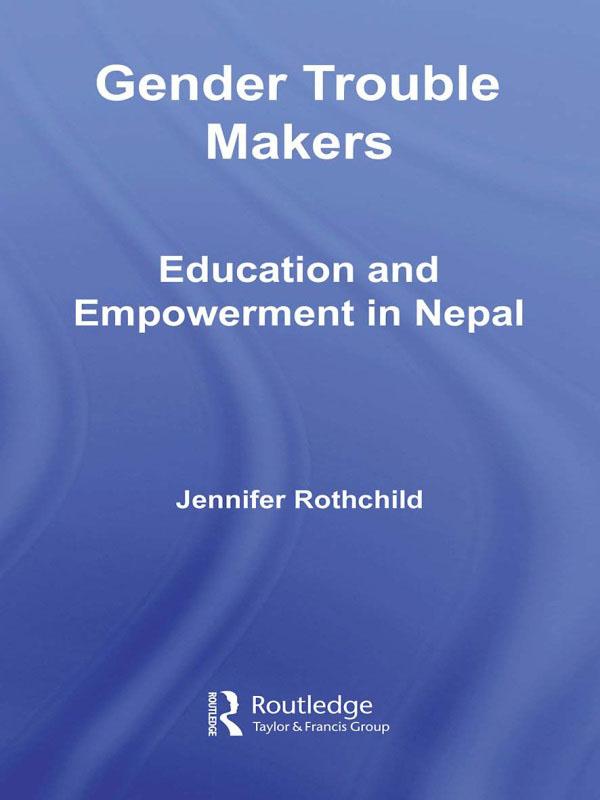
International development efforts aimed at improving girls’ lives and education have been well-intended, somewhat effective, but ultimately short-sighted and incomplete. This is because international development efforts often operate under a reductive understanding of the term 'gender' and how it influences the lives of girls and boys. Gender is more commonly conceived by international efforts as characteristics which are ascribed to girls as norms for behaviour.
In particular, the analysis in Gender Trouble Makers focuses on the social constructions of gender and the ways in which gender was reinforced and maintained through a case study in rural Nepal.
In developing countries like Nepal, promoting access to and participation in existing formal education programme is clearly necessary, but it is not, in itself, sufficient to transform gender power relations in the broader society. When gender is properly addressed as a process, then all stakeholders involved - researchers, governmental officials, and community members - can begin to understand and devise more effective ways to increase both girl and boy students’ enrollment, participation, and success in school.
Płać wygodnie kartą, Klarną, Apple Pay lub Google Pay. Nie jesteś zadowolony? Zawsze masz 14-dniową gwarancję zwrotu pieniędzy. Więcej przeczytasz w naszych warunkach. Masz pytania? Napisz do nas na hello@memmo.org.
Memmo ułatwia naukę – gdziekolwiek jesteś na świecie. U nas znajdziesz podręczniki i sprytne narzędzia do nauki w jednym miejscu: streszczenia, quizy, podcasty i fiszki. A do tego Ted, Twój kumpel do nauki, który odpowie na wszystko, co Cię nurtuje. Ponad 50 000 studentów już tu się uczy – stworzone, byś uczył się szybciej i mniej stresował.