
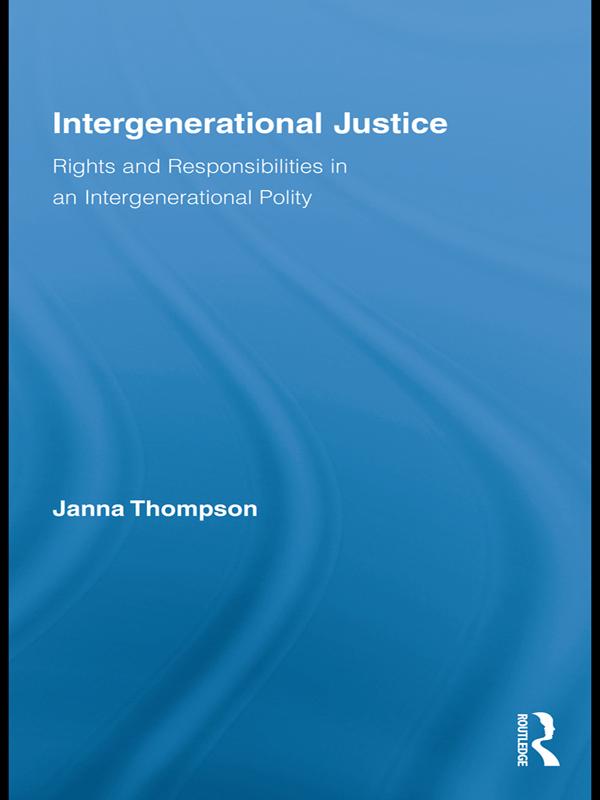
In this timely study, Thompson presents a theory of intergenerational justice that gives citizens duties to past and future generations, showing why people can make legitimate demands of their successors and explaining what relationships between contemporary generations count as fair. What connects these various responsibilities and entitlements is a view about individual interests that both argues that individuals are motivated by intergenerational concerns, and that a polity that appropriately recognizes these interests must support and accept intergenerational responsibilities. The book ranges over the philosophical, ethical, political and environmental questions raised by intergenerational issues: how we can have duties to non-existent people, whether we can wrong the dead or be held responsible for what they did, what sacrifices we should make for our successors, and whether we have duties to people of the remote future. Encompassing the ethical problems created by demographic change, the ethical issues of population control and intergenerational implications of new technologies for creating people, this book will be of interest to those studying philosophy, politics, legal theory, and environmental studies.
Płać wygodnie kartą, Klarną, Apple Pay lub Google Pay. Nie jesteś zadowolony? Zawsze masz 14-dniową gwarancję zwrotu pieniędzy. Więcej przeczytasz w naszych warunkach. Masz pytania? Napisz do nas na hello@memmo.org.
Memmo ułatwia naukę – gdziekolwiek jesteś na świecie. U nas znajdziesz podręczniki i sprytne narzędzia do nauki w jednym miejscu: streszczenia, quizy, podcasty i fiszki. A do tego Ted, Twój kumpel do nauki, który odpowie na wszystko, co Cię nurtuje. Ponad 50 000 studentów już tu się uczy – stworzone, byś uczył się szybciej i mniej stresował.