
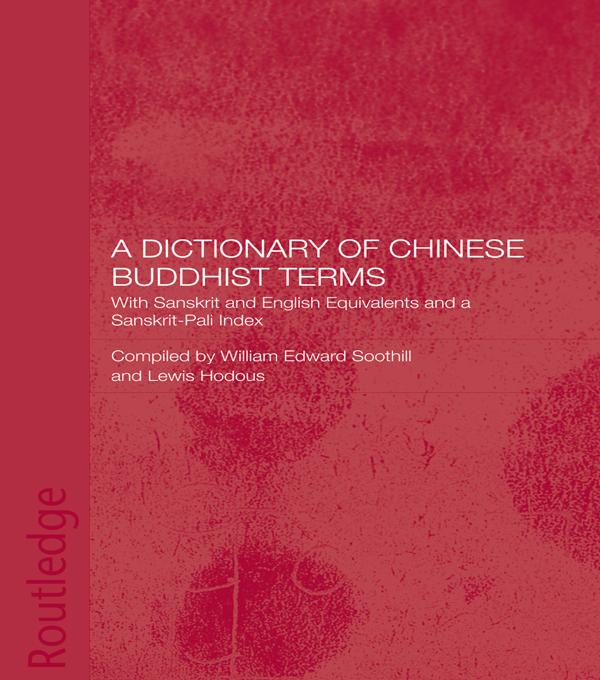
This invaluable interpretive tool, first published in 1937, is now available for the first time in a paperback edition specially aimed at students of Chinese Buddhism.
Those who have endeavoured to read Chinese texts apart from the apprehension of a Sanskrit background have generally made a fallacious interpretation, for the Buddhist canon is basically translation, or analogous to translation. In consequence, a large number of terms existing are employed approximately to connote imported ideas, as the various Chinese translators understood those ideas. Various translators invented different terms; and, even when the same term was finally adopted, its connotation varied, sometimes widely, from the Chinese term of phrase as normally used by the Chinese.
For instance, klésa undoubtedly has a meaning in Sanskrit similar to that of, i.e. affliction, distress, trouble. In Buddhism affliction (or, as it may be understood from Chinese, the afflicters, distressers, troublers) means passions and illusions; and consequently fan-nao in Buddhist phraseology has acquired this technical connotation of the passions and illusions. Many terms of a similar character are noted in the body of this work. Consequent partly on this use of ordinary terms, even a well-educated Chinese without a knowledge of the technical equivalents finds himself unable to understand their implications.
Płać wygodnie kartą, Klarną, Apple Pay lub Google Pay. Nie jesteś zadowolony? Zawsze masz 14-dniową gwarancję zwrotu pieniędzy. Więcej przeczytasz w naszych warunkach. Masz pytania? Napisz do nas na hello@memmo.org.
Memmo ułatwia naukę – gdziekolwiek jesteś na świecie. U nas znajdziesz podręczniki i sprytne narzędzia do nauki w jednym miejscu: streszczenia, quizy, podcasty i fiszki. A do tego Ted, Twój kumpel do nauki, który odpowie na wszystko, co Cię nurtuje. Ponad 50 000 studentów już tu się uczy – stworzone, byś uczył się szybciej i mniej stresował.