
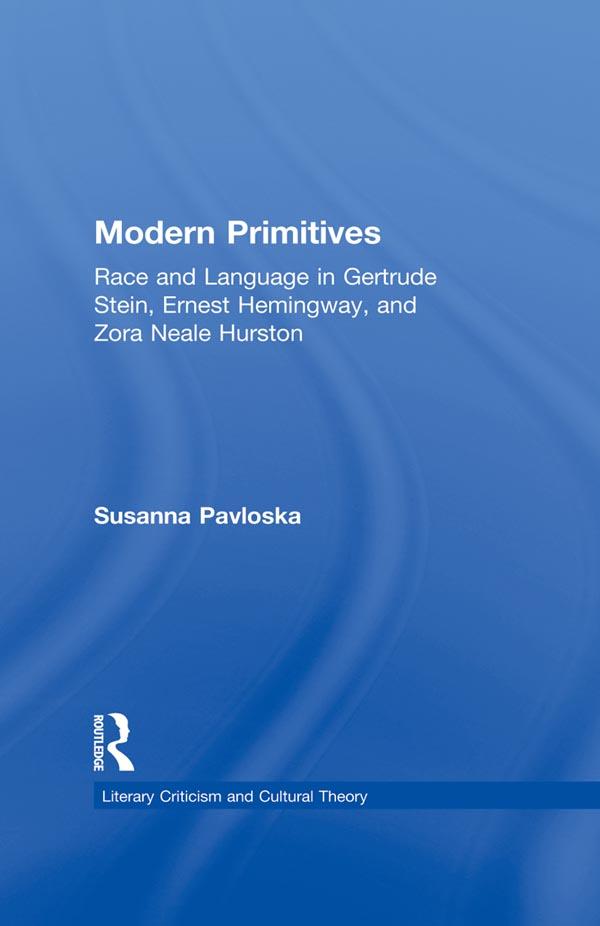
This book explores the ways in which the American writers Gertrude Stein, Ernest Hemingway, and Zora Neale Hurston used modernist primitivism to assert a uniquely American literary identity in the face of European cultural hegemony.
The extended Introduction traces the history of primitivism from a classical rhetorical trope to its emergence in the twentieth century as aesthetic, exemplified by Picasso and his use of African masks, that combined new work in the human sciences especially anthropology and psychology, with new ideas in the visual arts to challenge traditional ideas of realism and artistic accomplishment. The first two chapters bring together visual evidence, published and unpublished writings, and linguistic theory to give the first detailed account of the theoretical and gender concerns of the Stein-Picasso collaboration, which culminated in Picasso's Les demoiselles d'Avignon and Stein's Melanctha.
In the final two chapters, the author shows how both Hemingway and Hurston participated in the racialist scientific debates of the 1920s and used primitivism to find their respective artistic voices: Hemingway in his use of American Indians in recasting his life narratives in the Nick Adams stories, and Hurston in her attempts to use her anthropological training to construct a mythic African-American past.
Płać wygodnie kartą, Klarną, Apple Pay lub Google Pay. Nie jesteś zadowolony? Zawsze masz 14-dniową gwarancję zwrotu pieniędzy. Więcej przeczytasz w naszych warunkach. Masz pytania? Napisz do nas na hello@memmo.org.
Memmo ułatwia naukę – gdziekolwiek jesteś na świecie. U nas znajdziesz podręczniki i sprytne narzędzia do nauki w jednym miejscu: streszczenia, quizy, podcasty i fiszki. A do tego Ted, Twój kumpel do nauki, który odpowie na wszystko, co Cię nurtuje. Ponad 50 000 studentów już tu się uczy – stworzone, byś uczył się szybciej i mniej stresował.