
Zanim poznałem Memmo, moje notatki były rozrzucone po PDF-ach. Teraz obszar roboczy zbiera wszystko w jednym miejscu — widzę dokładnie, co jeszcze muszę powtórzyć.
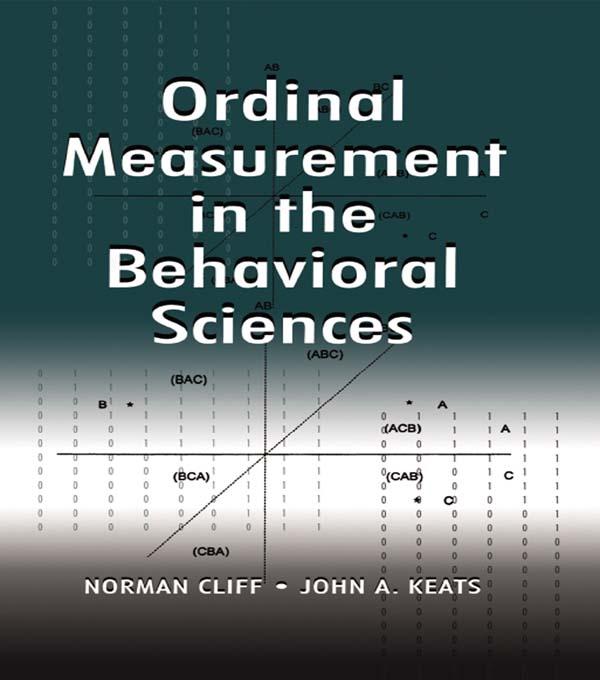
This book provides an alternative method for measuring individual differences in psychological, educational, and other behavioral sciences studies. It is based on the assumptions of ordinal statistics as explained in Norman Cliff's 1996 Ordinal Methods for Behavioral Data Analysis. It provides the necessary background on ordinal measurement to permit its use to assess psychological and psychophysical tests and scales and interpret the data obtained. The authors believe that some of the behavioral measurement models used today do not fit the data or are inherently self-contradictory. Applications of these models can therefore lead to unwarranted inferences regarding the status of the derived variables. These methods can also be difficult to apply, particularly in small-sample contexts without making additional, unrealistic assumptions. Ordinal methods more closely reflect the original data, are simple to apply, and can be used in samples of any size. The book's approach is in essence a return to simple empiricism in psychological measurement.
Ordinal Measurement in the Behavioral Sciences provides:
*methods for analyzing test responses;
*extensive discussions of ordinal approaches to analyzing data that are judgments of stimuli;
*methods for treating psychological data in ways consistent with its ordinal nature so as to stimulate new developments in this area; and
*ordinal test theory and the unfolding methods that are applicable to cross-cultural studies.
Advanced students, researchers, and practitioners concerned with psychological measurement should find this book relevant. Measurement professionals will find it provides useful and simple methods that stimulate thought about measurement's real issues.
Zanim poznałem Memmo, moje notatki były rozrzucone po PDF-ach. Teraz obszar roboczy zbiera wszystko w jednym miejscu — widzę dokładnie, co jeszcze muszę powtórzyć.
Podsumowania Memmo to złoto przed egzaminami. Nie muszę czytać 800 stron dwa tygodnie wcześniej — tylko to, co najważniejsze.
Czat AI uratował mnie niejeden raz w noc przed egzaminem. Pytam, dopóki nie zrozumiem — i nie muszę czekać na odpowiedź od grupy studyjnej.
Quizy trafiają w punkt, jeśli chodzi o to, co muszę wiedzieć. Memmo śledzi, na czym się zacinam — więc ćwiczę tylko to, co naprawdę się liczy.
Fiszki z powtórkami rozłożonymi w czasie to magia. Memmo wie, kiedy mam coś zapomnieć i przypomina mi o tym.
Podcasty AI to mój faworyt. Słucham w drodze do szkoły i powtarzam materiał, nie siedząc przed komputerem.

Handbok i kvalitativa metoder
281 kr

Hållbar utveckling: en introduktion för ingenjörer och andra problemlösare
334 kr

Brymans Samhällsvetenskapliga metoder
390 kr

Projektledning
491 kr

Den orättvisa hälsan: om socioekonomiska skillnader i hälsa och livslängd
326 kr

Vetenskapsteori för nybörjare
196 kr

Organizational Leadership
429 kr

På väg mot läraryrket
172 kr

Det sociala livet i skolan: Socialpsykologiska perspektiv
253 kr

Betygsättningens didaktik
151 kr

Personality
402 kr

Studying Leadership
404 kr

Managing Innovation
449 kr

Introduktion till samhällsvetenskaplig metod
347 kr

The Psychology of Sex and Gender
698 kr

Evidens och kunskap för socialt arbete
207 kr

Introduction to Leadership
605 kr