
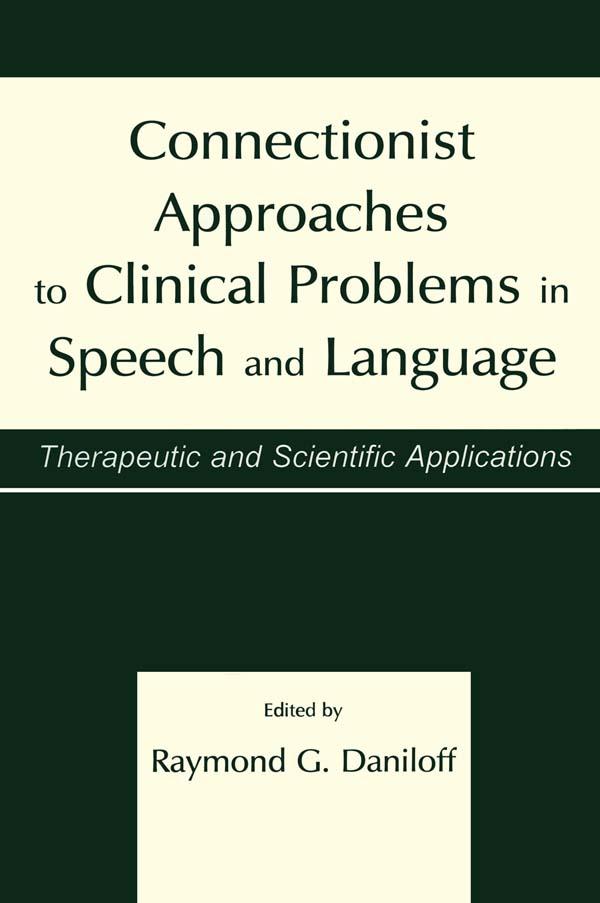
Connectionist accounts of language acquisition, processing, and dissolution proliferate despite attacks from some linguists, cognitive scientists, and engineers. Although the networks of exquisitely interconnected perceptrons postulated by PDP theorists may not be anatomically homologous with actual brain anatomy, a growing body of research suggests that the posited network functions can support many human behaviors. This volume brings together contributors with a variety of backgrounds and perspectives to explore, for the first time, the clinical implications of whole-language connectionist models. Demonstrating that these models are powerful and have explained many phenomena of language acquisition, language therapy, and speech processing, especially at the engineering level, they focus specifically on applications of connectionist theory to delayed language, aphasia, phonological acquisition, and speech perception. Connectionist models, they conclude, offer a new interpretive framework for the discussion of information processing in humans and other animals that will be of great utility to all those who study language and seek to intervene in language disorders.
Płać wygodnie kartą, Klarną, Apple Pay lub Google Pay. Nie jesteś zadowolony? Zawsze masz 14-dniową gwarancję zwrotu pieniędzy. Więcej przeczytasz w naszych warunkach. Masz pytania? Napisz do nas na hello@memmo.org.
Memmo ułatwia naukę – gdziekolwiek jesteś na świecie. U nas znajdziesz podręczniki i sprytne narzędzia do nauki w jednym miejscu: streszczenia, quizy, podcasty i fiszki. A do tego Ted, Twój kumpel do nauki, który odpowie na wszystko, co Cię nurtuje. Ponad 50 000 studentów już tu się uczy – stworzone, byś uczył się szybciej i mniej stresował.