
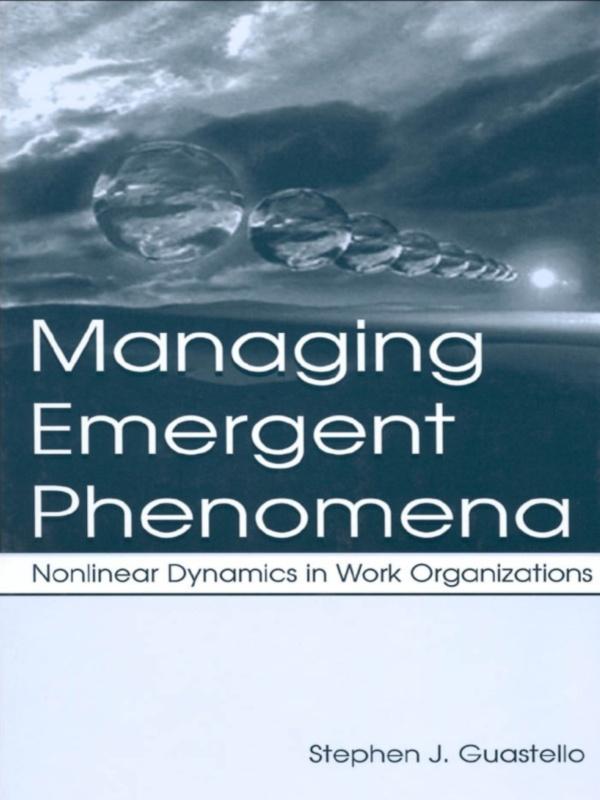
Chaos, catastrophe, self-organization, and complexity theories (nonlinear dynamics) now have practical and measurable roles in the functioning of work organizations. Managing Emergent Phenomena begins by describing how the concept of an organization has changed from a bureaucracy, to a humanistic and organic system, to a complex adaptive system. The dynamics concepts are then explained along with the most recent research methods for analyzing real data. Applications include: work motivation, personnel selection and turnover, creative thinking by individuals and groups, the development of social networks, coordination in work groups, the emergence of leaders, work performance in organizational hierarchies, economic problems that are relevant to organizations, techniques for predicting the future, and emergency management.
Each application begins with a tight summary of standard thinking on a subject, followed by the new insights that are afforded by nonlinear dynamics and the empirical data supporting those ideas. Unusual concepts are also encountered, such as the organizational unconscious, collective intelligence, and the revolt of the slaved variables. The net results are a new perspective on what is really important in organizational life, original insights on familiar experiences, and some clear signposts for the next generation of nonlinear social scientists.
Płać wygodnie kartą, Klarną, Apple Pay lub Google Pay. Nie jesteś zadowolony? Zawsze masz 14-dniową gwarancję zwrotu pieniędzy. Więcej przeczytasz w naszych warunkach. Masz pytania? Napisz do nas na hello@memmo.org.
Memmo ułatwia naukę – gdziekolwiek jesteś na świecie. U nas znajdziesz podręczniki i sprytne narzędzia do nauki w jednym miejscu: streszczenia, quizy, podcasty i fiszki. A do tego Ted, Twój kumpel do nauki, który odpowie na wszystko, co Cię nurtuje. Ponad 50 000 studentów już tu się uczy – stworzone, byś uczył się szybciej i mniej stresował.