
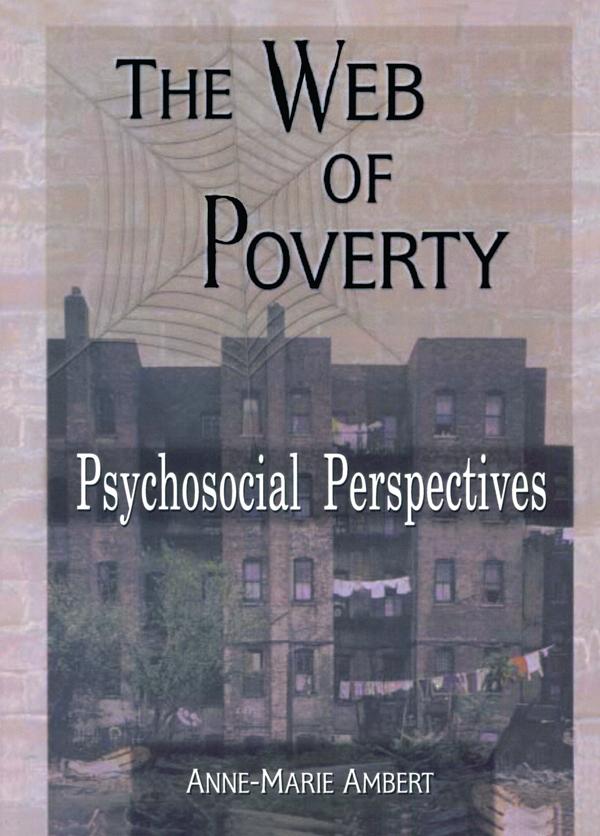
The most interdisciplinary, integrated text on poverty, The Web of Poverty: Psychosocial Perspectives gives you a full understanding of poverty and its consequences, equipping you to affect social change. This unique book examines the social and personal causes of poverty, focusing on the consequences of poverty at the neighborhood and school levels and on families, children, and youth. Ethnic and racial minorities are considered throughout the text, and a chapter is devoted to the interface of poverty, segregation, and discrimination. The Web of Poverty helps you clearly see the effects of poverty by considering the cultural and social contexts of victims’lives. In doing so, it fills a gap in the literature caused by books that overlook personal issues and data related to individual experiences. Chapters address contentious and sensitive issues within a critical psychosocial perspective that informs concepts such as the subculture of poverty, social pathologies, and the “overclass.” Many of the topics and perspectives you'll explore in its pages are rarely considered together in one volume. Specifically, you'll read about:
- the plight of impoverished mothers and their children
- a comparison of the poverty of disadvantaged African Americans and poor white Americans
- health disadvantages of the poor
- the effects of poverty on school systems and the quality of education students receive
- the factors of age, race, and ethnicity that can lead to poverty
- a refutation of the notion of genetic inferiority of the poorPoverty is often the cause of other social ills such as delinquency, which can destroy the social fabric of neighborhoods and limit opportunities to escape impoverished situations. The Web of Poverty will help you accurately see poverty as part of this “big picture.” It contains material from the fields of sociology, developmental psychology, family studies, economics, delinquency, ethnic studies, health, and behavior genetics. This amalgamation gives you a thorough psychosocial perspective.
Płać wygodnie kartą, Klarną, Apple Pay lub Google Pay. Nie jesteś zadowolony? Zawsze masz 14-dniową gwarancję zwrotu pieniędzy. Więcej przeczytasz w naszych warunkach. Masz pytania? Napisz do nas na hello@memmo.org.
Memmo ułatwia naukę – gdziekolwiek jesteś na świecie. U nas znajdziesz podręczniki i sprytne narzędzia do nauki w jednym miejscu: streszczenia, quizy, podcasty i fiszki. A do tego Ted, Twój kumpel do nauki, który odpowie na wszystko, co Cię nurtuje. Ponad 50 000 studentów już tu się uczy – stworzone, byś uczył się szybciej i mniej stresował.