
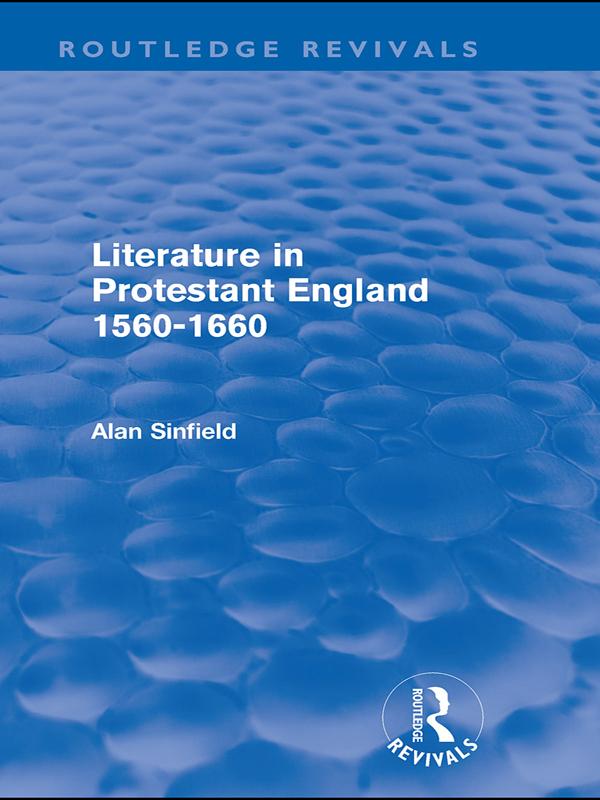
The hardline, uncompromising theology preached by the English Church in the 16th and 17th Centuries had disturbing effects on the literature of the period. This study, originally published in 1983, assesses the importance of the prevailing religious climate to the work of several major writers, both in and out of sympathy with the contemporary protestantism. It is argued that the accepted view of the period as essentially 'Christian-Humanist' obscures the harsher aspects of a Calvinism which throws into relief the agonies of a writer like Donne, the acceptances of one like George Herbert.
Many writers rejected more or less explicitly the Christian dogma, through the heroic assertion of human potential in Shakespearean and other dramatic characters, the nihilism of Marlowe, or the secular rationalism of Bacon and Hobbes. Milton is central to this complex weft of belief and rejection, piety and atheism, acceptance of predestination and determination to accept fate, that characterises the period.
Finally, Sinfield shows how this protestantism disintegrated under the strain of internal contradictions and external pressures, and in the process helped to stimulate secularism. In this original and clearly written book, scholarship is deployed unobstrusively to place many major works in an unaccustomed and stimulating perspective.
Płać wygodnie kartą, Klarną, Apple Pay lub Google Pay. Nie jesteś zadowolony? Zawsze masz 14-dniową gwarancję zwrotu pieniędzy. Więcej przeczytasz w naszych warunkach. Masz pytania? Napisz do nas na hello@memmo.org.
Memmo ułatwia naukę – gdziekolwiek jesteś na świecie. U nas znajdziesz podręczniki i sprytne narzędzia do nauki w jednym miejscu: streszczenia, quizy, podcasty i fiszki. A do tego Ted, Twój kumpel do nauki, który odpowie na wszystko, co Cię nurtuje. Ponad 50 000 studentów już tu się uczy – stworzone, byś uczył się szybciej i mniej stresował.