
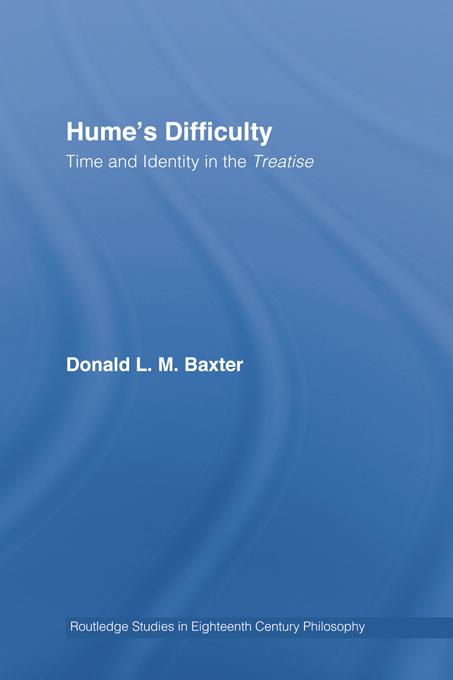
In this volume--the first, focused study of Hume on time and identity--Baxter focuses on Hume’s treatment of the concept of numerical identity, which is central to Hume's famous discussions of the external world and personal identity. Hume raises a long unappreciated, and still unresolved, difficulty with the concept of identity: how to represent something as "a medium betwixt unity and number." Superficial resemblance to Frege’s famous puzzle has kept the difficulty in the shadows. Hume’s way of addressing it makes sense only in the context of his unorthodox theory of time. Baxter shows the defensibility of that theory against past dismissive interpretations, especially of Hume’s stance on infinite divisibility. Later the author shows how the difficulty underlies Hume’s later worries about his theory of personal identity, in a new reading motivated by Hume’s important appeals to consciousness. Baxter casts Hume throughout as an acute metaphysician, and reconciles this side of Hume with his overarching Pyrrhonian skepticism.
Płać wygodnie kartą, Klarną, Apple Pay lub Google Pay. Nie jesteś zadowolony? Zawsze masz 14-dniową gwarancję zwrotu pieniędzy. Więcej przeczytasz w naszych warunkach. Masz pytania? Napisz do nas na hello@memmo.org.
Memmo ułatwia naukę – gdziekolwiek jesteś na świecie. U nas znajdziesz podręczniki i sprytne narzędzia do nauki w jednym miejscu: streszczenia, quizy, podcasty i fiszki. A do tego Ted, Twój kumpel do nauki, który odpowie na wszystko, co Cię nurtuje. Ponad 50 000 studentów już tu się uczy – stworzone, byś uczył się szybciej i mniej stresował.