
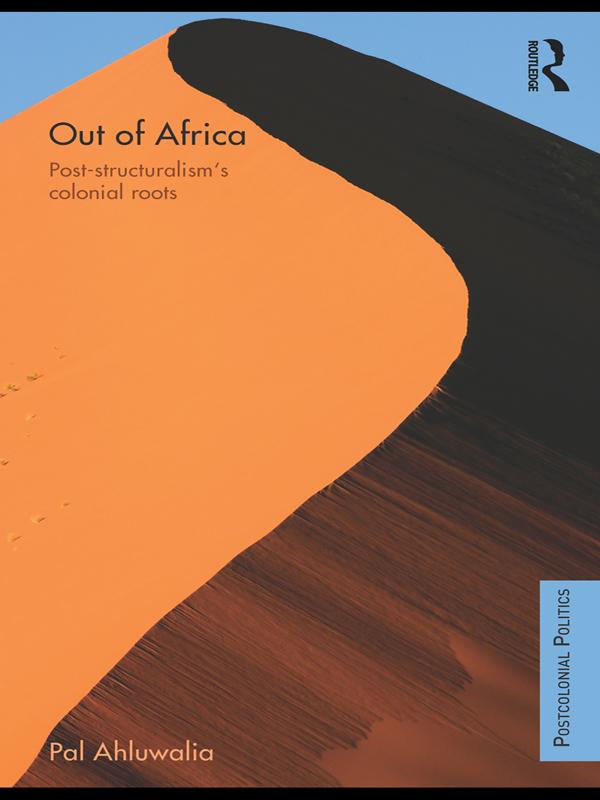
At the heart of this book is the argument that the fact that so many post-structuralist French intellectuals have a strong ‘colonial’ connection, usually with Algeria, cannot be a coincidence. The ‘biographical’ fact that so many French intellectuals were born in or otherwise connected with French Algeria has often been noted, but it has never been theorised. Ahluwalia makes a convincing case that post-structuralism in fact has colonial and postcolonial roots. This is an important argument, and one that ‘connects’ two theoretical currents that continue to be of great interest, post-structuralism and postcolonialism.
The re-reading of what is now familiar material against the background of de-colonial struggles demonstrates the extent to which it is this new condition that prompted theory to question long-held assumptions inscribed in the European colonial enterprise. The wide-ranging discussion, ranging across authors as different as Foucault, Derrida, Fanon, Althusser, Cixous, Bourdieu and Lyotard, enables the reader to make connections that have remained unnoticed or been neglected. It also brings back into view a history of struggles, both political and theoretical, that has shaped the landscape of critique in the social sciences and humanities.
This clear and lucid discussion of important and often difficult thinkers will be widely read and widely debated by students and academics alike.
Płać wygodnie kartą, Klarną, Apple Pay lub Google Pay. Nie jesteś zadowolony? Zawsze masz 14-dniową gwarancję zwrotu pieniędzy. Więcej przeczytasz w naszych warunkach. Masz pytania? Napisz do nas na hello@memmo.org.
Memmo ułatwia naukę – gdziekolwiek jesteś na świecie. U nas znajdziesz podręczniki i sprytne narzędzia do nauki w jednym miejscu: streszczenia, quizy, podcasty i fiszki. A do tego Ted, Twój kumpel do nauki, który odpowie na wszystko, co Cię nurtuje. Ponad 50 000 studentów już tu się uczy – stworzone, byś uczył się szybciej i mniej stresował.