
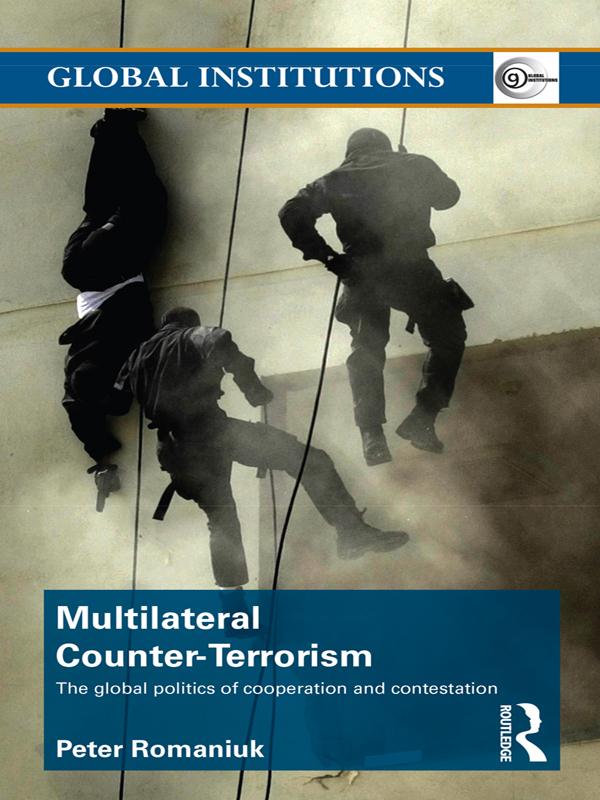
Contemporary terrorism is a global phenomenon requiring a globalized response. In this book Peter Romaniuk aims to assess to what extent states seek multilateral responses to the threats they face from terrorists. Providing a concise history and a clear discussion of current patterns of counter-terrorist co-operation, this book:
- analyses a wide spectrum of institutions from the United Nations and its various bodies to military, intelligence and law enforcement agencies
- explains the full range of cooperative counter-terrorist activities and the patterns across them, from the use of intelligence and military force to criminal law measures, financial controls and diplomacy
- examines under what conditions states cooperate to suppress terrorism
- evaluates how existing international institutions been affected by the US-led "global war on terror," launched after the 9/11 terrorist attacks.
The book contests that the whilst there are several notable examples of successful counterterrorism cooperation, past and present, this work suggests that the broader trend can only be understood if we accept that across the domains of counter-terrorism policy, cooperation often resembles a competition for influence over outcomes.
Multilateral Counter-terrorism is an essential resource for all students and scholars of international politics, criminology and terrorism studies.
Płać wygodnie kartą, Klarną, Apple Pay lub Google Pay. Nie jesteś zadowolony? Zawsze masz 14-dniową gwarancję zwrotu pieniędzy. Więcej przeczytasz w naszych warunkach. Masz pytania? Napisz do nas na hello@memmo.org.
Memmo ułatwia naukę – gdziekolwiek jesteś na świecie. U nas znajdziesz podręczniki i sprytne narzędzia do nauki w jednym miejscu: streszczenia, quizy, podcasty i fiszki. A do tego Ted, Twój kumpel do nauki, który odpowie na wszystko, co Cię nurtuje. Ponad 50 000 studentów już tu się uczy – stworzone, byś uczył się szybciej i mniej stresował.