
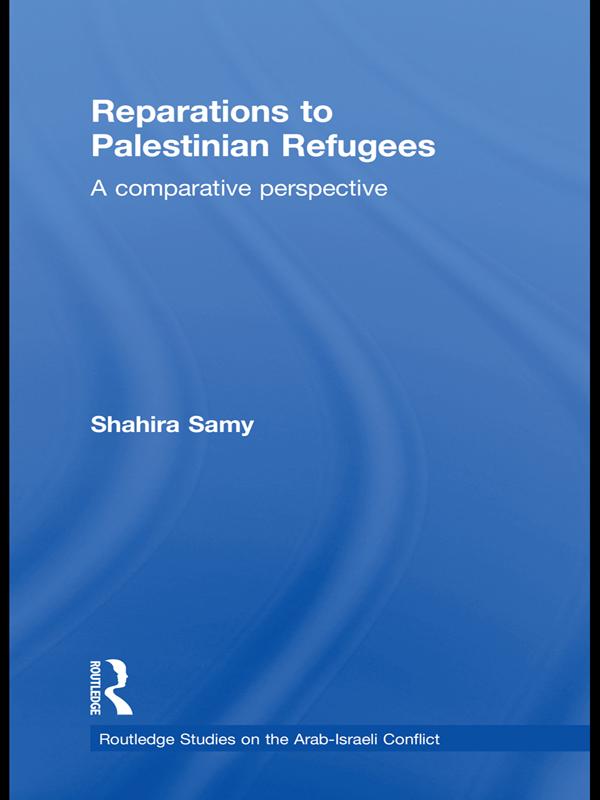
This book delves into the issue of reparations in relation to Palestinian refugees in their search for a solution to their displacement and dispossession. Highlighting the broad spectrum of reparations available as forms of remedy for a historical injustice, the author probes the reasons behind the failure to reach a reparations agreement till the present day and discusses the significance of issues of apology, recognition and acknowledgement of responsibility.
In its approach, the book departs from traditional and modern perceptions of reparations as featuring in international law, history, politics and philosophy. The analysis is focused on a comparative study of two other cases - the German-Jewish reparations agreement of 1952 and the Cypriot conflict - in search of parameters that may constitute a framework to a potential reparations model applicable to the case of Palestinian refugees. When compared to the history of negotiations over reparations in the Israeli-Palestinian case, the findings of the comparison shed light on why reparations are still illusive. The book thus offers an explanation of why reparations to Palestinian refugees have failed, and offers suggestions on how to enhance prospects for reparations to Palestinian displacement and dispossessions.
A unique contribution to the study of the Arab-Israeli peace process, this book will be an important reference for scholars of the Arab-Israeli conflict, and for students and scholars of politics, conflict resolution and history.
Płać wygodnie kartą, Klarną, Apple Pay lub Google Pay. Nie jesteś zadowolony? Zawsze masz 14-dniową gwarancję zwrotu pieniędzy. Więcej przeczytasz w naszych warunkach. Masz pytania? Napisz do nas na hello@memmo.org.
Memmo ułatwia naukę – gdziekolwiek jesteś na świecie. U nas znajdziesz podręczniki i sprytne narzędzia do nauki w jednym miejscu: streszczenia, quizy, podcasty i fiszki. A do tego Ted, Twój kumpel do nauki, który odpowie na wszystko, co Cię nurtuje. Ponad 50 000 studentów już tu się uczy – stworzone, byś uczył się szybciej i mniej stresował.