
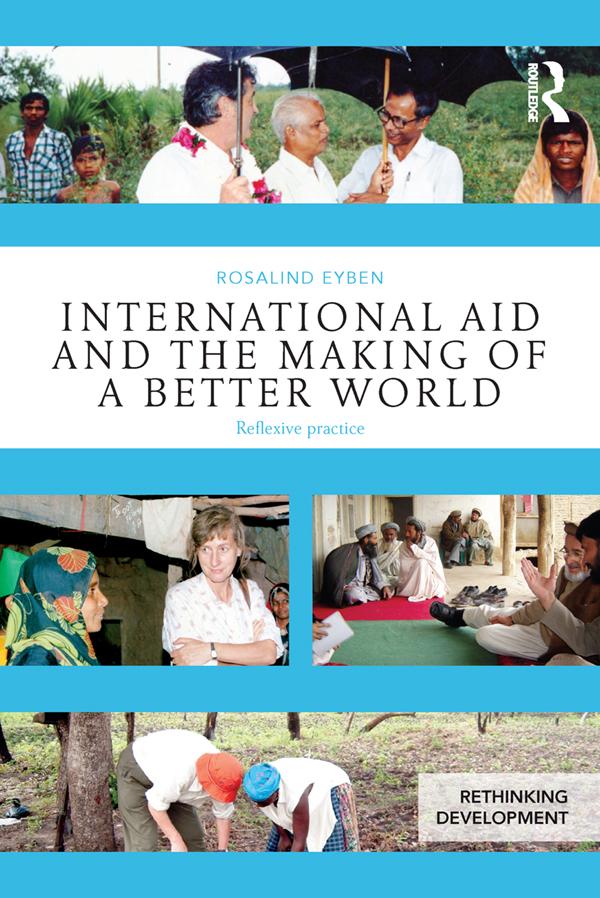
How can international aid professionals manage to deal with the daily dilemmas of working for the wellbeing of people in countries other than their own? A scholar-activist and lifelong development practitioner seeks to answer that question in a book that provides a vivid and accessible insight into the world of aid – its people, ideas and values against the backdrop of a broader historical analysis of the contested ideals and politics of aid operations from the 1960s to the present day.
Moving between aid-recipient countries, head office and global policy spaces, Rosalind Eyben critically examines her own behaviour to explore what happens when trying to improve people’s lives in far-away countries and warns how self-deception may construct obstacles to the very change desired, considering the challenge to traditional aid practices posed by new donors like Brazil who speak of history and relationships. The book proposes that to help make this a better world, individuals and organisations working in international development must respond self-critically to the dilemmas of power and knowledge that shape aid’s messy relations.
Written in an accessible way with vignettes, stories and dialogue, this critical history of aid provides practical tools and methodology for students in development studies, anthropology and international studies and for development practitioners to adopt the habit of reflexivity when helping to make a better world.
Płać wygodnie kartą, Klarną, Apple Pay lub Google Pay. Nie jesteś zadowolony? Zawsze masz 14-dniową gwarancję zwrotu pieniędzy. Więcej przeczytasz w naszych warunkach. Masz pytania? Napisz do nas na hello@memmo.org.
Memmo ułatwia naukę – gdziekolwiek jesteś na świecie. U nas znajdziesz podręczniki i sprytne narzędzia do nauki w jednym miejscu: streszczenia, quizy, podcasty i fiszki. A do tego Ted, Twój kumpel do nauki, który odpowie na wszystko, co Cię nurtuje. Ponad 50 000 studentów już tu się uczy – stworzone, byś uczył się szybciej i mniej stresował.