
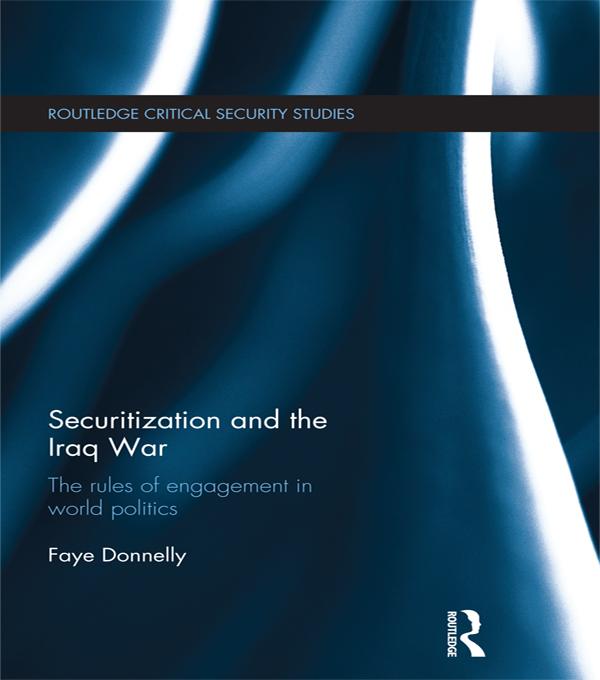
This book critiques the conceptualization of security found in mainstream and critical theoretical debates, and applies this to the empirical case of the 2003 Iraq War.
The Iraq War represents one of the most puzzling, complex, and controversial events in the post-Cold War era. The manner in which the Bush administration finally decided to hold Saddam Hussein accountable through military intervention provoked a worldwide outcry due to the narratives they constructed to justify the "pre-emptive use of force" and "enhanced interrogation techniques."
Responding to constructivist and post-structuralist scholars' calls for a turn to discourse, and aligning its argument with critical security studies, particularly the Copenhagen School (CS), this book conceptualizes language as a pivotal mechanism of power. Adopting a Wittgensteinian approach, it moves away from thinking about the nexus between security and language from a single action, or speech act, to a series of actions or interactions. To illustrate this new approach, the author examines two cases in particular: the UN inspectors' finding that there was no credible evidence that Iraq possessed weapons of mass destruction (WMD) in early 2003 and the Abu Ghraib scandal in 2004. Both events show that the boundaries and relations between securitized rules and environments are not pre-given but produced in a particular language game.
This book will be of much interest to students of critical security studies, US foreign policy, and IR in general.
Płać wygodnie kartą, Klarną, Apple Pay lub Google Pay. Nie jesteś zadowolony? Zawsze masz 14-dniową gwarancję zwrotu pieniędzy. Więcej przeczytasz w naszych warunkach. Masz pytania? Napisz do nas na hello@memmo.org.
Memmo ułatwia naukę – gdziekolwiek jesteś na świecie. U nas znajdziesz podręczniki i sprytne narzędzia do nauki w jednym miejscu: streszczenia, quizy, podcasty i fiszki. A do tego Ted, Twój kumpel do nauki, który odpowie na wszystko, co Cię nurtuje. Ponad 50 000 studentów już tu się uczy – stworzone, byś uczył się szybciej i mniej stresował.