
Zanim poznałem Memmo, moje notatki były rozrzucone po PDF-ach. Teraz obszar roboczy zbiera wszystko w jednym miejscu — widzę dokładnie, co jeszcze muszę powtórzyć.
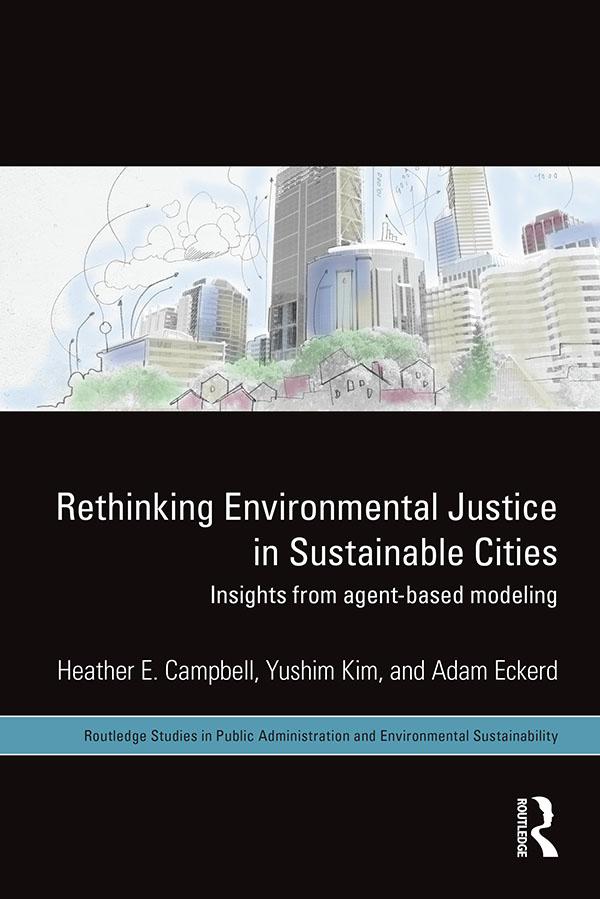
As the study of environmental policy and justice becomes increasingly significant in today’s global climate, standard statistical approaches to gathering data have become less helpful at generating new insights and possibilities. None of the conventional frameworks easily allow for the empirical modeling of the interactions of all the actors involved, or for the emergence of outcomes unintended by the actors. The existing frameworks account for the "what," but not for the "why."
Heather E. Campbell, Yushim Kim, and Adam Eckerd bring an innovative perspective to environmental justice research. Their approach adjusts the narrower questions often asked in the study of environmental justice, expanding to broader investigations of how and why environmental inequities occur. Using agent-based modeling (ABM), they study the interactions and interdependencies among different agents such as firms, residents, and government institutions. Through simulation, the authors test underlying assumptions in environmental justice and discover ways to modify existing theories to better explain why environmental injustice occurs. Furthermore, they use ABM to generate empirically testable hypotheses, which they employ to check if their simulated findings are supported in the real world using real data.
The pioneering research on environmental justice in this text will have effects on the field of environmental policy as a whole. For social science and policy researchers, this book explores how to employ new and experimental methods of inquiry on challenging social problems, and for the field of environmental justice, the authors demonstrate how ABM helps illuminate the complex social and policy interactions that lead to both environmental justice and injustice.
Zanim poznałem Memmo, moje notatki były rozrzucone po PDF-ach. Teraz obszar roboczy zbiera wszystko w jednym miejscu — widzę dokładnie, co jeszcze muszę powtórzyć.
Podsumowania Memmo to złoto przed egzaminami. Nie muszę czytać 800 stron dwa tygodnie wcześniej — tylko to, co najważniejsze.
Czat AI uratował mnie niejeden raz w noc przed egzaminem. Pytam, dopóki nie zrozumiem — i nie muszę czekać na odpowiedź od grupy studyjnej.
Quizy trafiają w punkt, jeśli chodzi o to, co muszę wiedzieć. Memmo śledzi, na czym się zacinam — więc ćwiczę tylko to, co naprawdę się liczy.
Fiszki z powtórkami rozłożonymi w czasie to magia. Memmo wie, kiedy mam coś zapomnieć i przypomina mi o tym.
Podcasty AI to mój faworyt. Słucham w drodze do szkoły i powtarzam materiał, nie siedząc przed komputerem.

Handbok i kvalitativa metoder
281 kr

Hållbar utveckling: en introduktion för ingenjörer och andra problemlösare
334 kr

Brymans Samhällsvetenskapliga metoder
390 kr

Projektledning
491 kr

Den orättvisa hälsan: om socioekonomiska skillnader i hälsa och livslängd
326 kr

Organizational Leadership
429 kr

Vetenskapsteori för nybörjare
196 kr

På väg mot läraryrket
172 kr

Det sociala livet i skolan: Socialpsykologiska perspektiv
253 kr

Betygsättningens didaktik
151 kr

Personality
402 kr

Studying Leadership
404 kr

Managing Innovation
477 kr

Introduktion till samhällsvetenskaplig metod
347 kr

The Psychology of Sex and Gender
698 kr

Introduction to Leadership
605 kr

Evidens och kunskap för socialt arbete
207 kr