
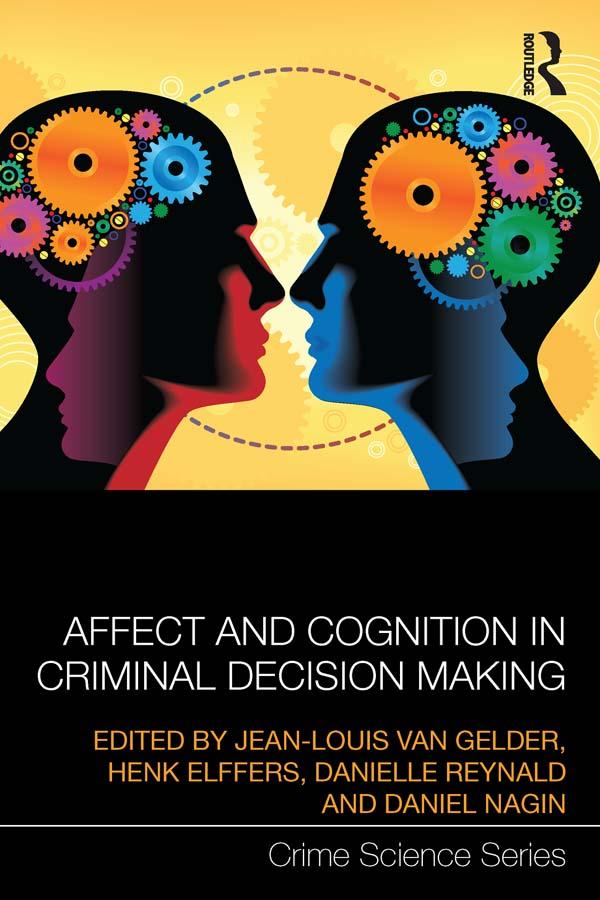
Research and theorizing on criminal decision making has not kept pace with recent developments in other fields of human decision making. Whereas criminal decision making theory is still largely dominated by cognitive approaches such as rational choice-based models, psychologists, behavioral economists and neuroscientists have found affect (i.e., emotions, moods) and visceral factors such as sexual arousal and drug craving, to play a fundamental role in human decision processes.
This book examines alternative approaches to incorporating affect into criminal decision making and testing its influence on such decisions. In so doing it generalizes extant cognitive theories of criminal decision making by incorporating affect into the decision process. In two conceptual and ten empirical chapters it is carefully argued how affect influences criminal decisions alongside rational and cognitive considerations. The empirical studies use a wide variety of methods ranging from interviews and observations to experimental approaches and questionnaires, and treat crimes as diverse as street robbery, pilfering, and sex offences. It will be of interest to criminologists, social psychologists, judgment and decision making researchers, behavioral economists and sociologists alike.
Płać wygodnie kartą, Klarną, Apple Pay lub Google Pay. Nie jesteś zadowolony? Zawsze masz 14-dniową gwarancję zwrotu pieniędzy. Więcej przeczytasz w naszych warunkach. Masz pytania? Napisz do nas na hello@memmo.org.
Memmo ułatwia naukę – gdziekolwiek jesteś na świecie. U nas znajdziesz podręczniki i sprytne narzędzia do nauki w jednym miejscu: streszczenia, quizy, podcasty i fiszki. A do tego Ted, Twój kumpel do nauki, który odpowie na wszystko, co Cię nurtuje. Ponad 50 000 studentów już tu się uczy – stworzone, byś uczył się szybciej i mniej stresował.