
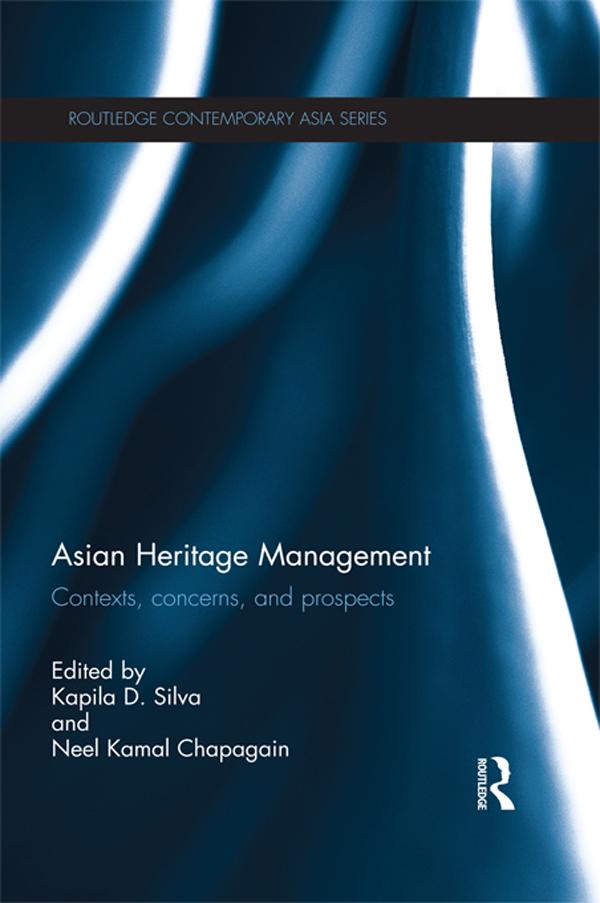
The prevalent global heritage discourse has been primarily Euro-centric in its origin, premise, and praxis. Diverse cultural, historical, and geographical contexts, such as that of Asia, call for more context-specific approaches to heritage management. This book explores this complexity of managing the cultural heritage in Asia.
Case studies include sites of Angkor, Himeji Castle, Kathmandu Valley, Luang Prabang, Lumbini, and Malacca, and the book uses these to explore the religious worldviews, heritage policies, intangible heritage dimensions, traditional preservation practices, cultural tourism, and the notion of cultural landscape that are crucial in understanding the cultural heritage in Asia. It critiques the contemporary regulatory frameworks in operation and focuses on the issues of global impact on the local cultures in the region. The book goes on to emphasize the need for integrated heritage management approaches that encompass the plurality of heritage conservation concerns in Asian countries.
Themes are discussed from the vantage point of heritage scholars and practitioners in the South, Southeast, and East Asia. This book thus presents a distinctive Asian perspective which is a valuable source for students and practitioners of heritage within and beyond the Asian context.
Płać wygodnie kartą, Klarną, Apple Pay lub Google Pay. Nie jesteś zadowolony? Zawsze masz 14-dniową gwarancję zwrotu pieniędzy. Więcej przeczytasz w naszych warunkach. Masz pytania? Napisz do nas na hello@memmo.org.
Memmo ułatwia naukę – gdziekolwiek jesteś na świecie. U nas znajdziesz podręczniki i sprytne narzędzia do nauki w jednym miejscu: streszczenia, quizy, podcasty i fiszki. A do tego Ted, Twój kumpel do nauki, który odpowie na wszystko, co Cię nurtuje. Ponad 50 000 studentów już tu się uczy – stworzone, byś uczył się szybciej i mniej stresował.