
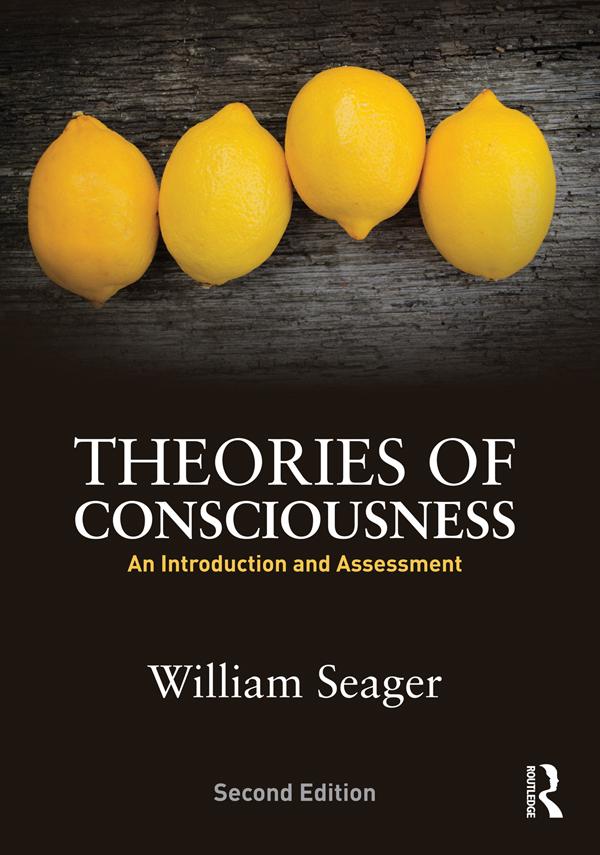
Despite recent strides in neuroscience and psychology that have deepened understanding of the brain, consciousness remains one of the greatest philosophical and scientific puzzles. The second edition of Theories of Consciousness: An Introduction and Assessment provides a fresh and up-to-date introduction to a variety of approaches to consciousness, and contributes to the current lively debate about the nature of consciousness and whether a scientific understanding of it is possible.
After an initial overview of the status and prospects of physicalism in the face of the problem of consciousness, William Seager explores key themes from Descartes - the founder of the modern problem of consciousness. He then turns to the most important theories of consciousness:
- identity theories and the generation problem
- higher-order thought theories of consciousness
- self-representational theories of consciousness
- Daniel Dennett’s theory of consciousness
- attention-based theories of consciousness
- representational theories of consciousness
- conscious intentionality
- panpsychism
- neutral monism
Thoroughly revised and expanded throughout, this second edition includes new chapters on animal consciousness, reflexive consciousness, combinatorial forms of panpsychism and neutral monism, as well as a significant new chapter on physicalism, emergence and consciousness.
The book’s broad scope, depth of coverage and focus on key philosophical positions and arguments make it an indispensable text for those teaching or studying philosophy of mind and psychology. It is also an excellent resource for those working in related fields such as cognitive science and the neuroscience of consciousness.
Płać wygodnie kartą, Klarną, Apple Pay lub Google Pay. Nie jesteś zadowolony? Zawsze masz 14-dniową gwarancję zwrotu pieniędzy. Więcej przeczytasz w naszych warunkach. Masz pytania? Napisz do nas na hello@memmo.org.
Memmo ułatwia naukę – gdziekolwiek jesteś na świecie. U nas znajdziesz podręczniki i sprytne narzędzia do nauki w jednym miejscu: streszczenia, quizy, podcasty i fiszki. A do tego Ted, Twój kumpel do nauki, który odpowie na wszystko, co Cię nurtuje. Ponad 50 000 studentów już tu się uczy – stworzone, byś uczył się szybciej i mniej stresował.