
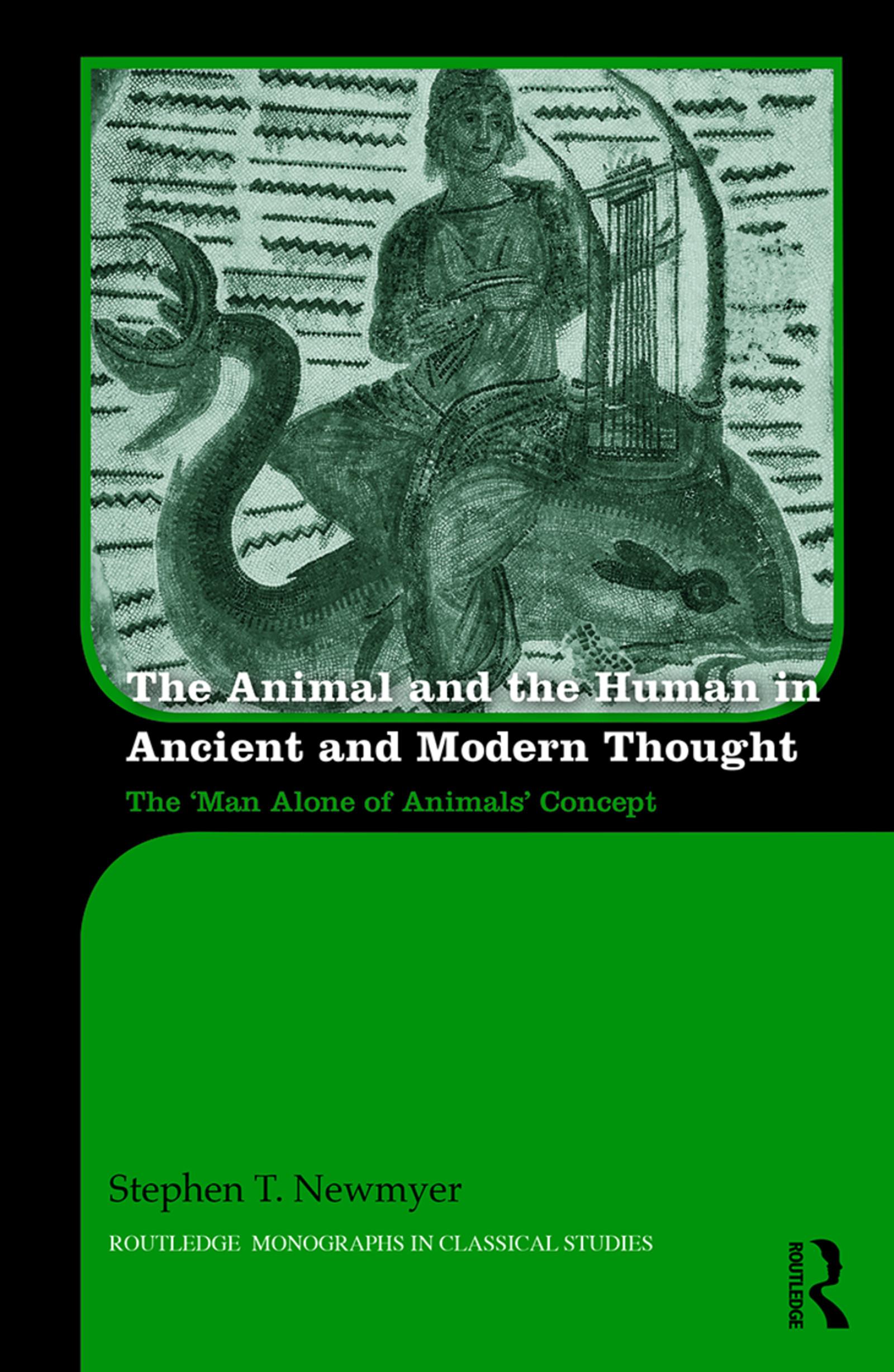
Ancient Greeks endeavored to define the human being vis-à-vis other animal species by isolating capacities and endowments which they considered to be unique to humans. This approach toward defining the human being still appears with surprising frequency, in modern philosophical treatises, in modern animal behavioral studies, and in animal rights literature, to argue both for and against the position that human beings are special and unique because of one or another attribute or skill that they are believed to possess. Some of the claims of man’s unique endowments have in recent years become the subject of intensive investigation by cognitive ethologists carried out in non-laboratory contexts. The debate is as lively now as in classical times, and, what is of particular note, the examples and methods of argumentation used to prove one or another position on any issue relating to the unique status of human beings that one encounters in contemporary philosophical or ethological literature frequently recall ancient precedents.
This is the first book-length study of the ‘man alone of animals’ topos in classical literature, not restricting its analysis to Greco-Roman claims of man’s intellectual uniqueness, but including classical assertions of man’s physiological and emotional uniqueness. It supplements this analysis of ancient manifestations with an examination of how the commonplace survives and has been restated, transformed, and extended in contemporary ethological literature and in the literature of the animal rights and animal welfare movements. Author Stephen T. Newmyer demonstrates that the anthropocentrism detected in Greek applications of the ‘man alone of animals’ topos is not only alive and well in many facets of the current debate on human-animal relations, but that combating its negative effects is a stated aim of some modern philosophers and activists.
Płać wygodnie kartą, Klarną, Apple Pay lub Google Pay. Nie jesteś zadowolony? Zawsze masz 14-dniową gwarancję zwrotu pieniędzy. Więcej przeczytasz w naszych warunkach. Masz pytania? Napisz do nas na hello@memmo.org.
Memmo ułatwia naukę – gdziekolwiek jesteś na świecie. U nas znajdziesz podręczniki i sprytne narzędzia do nauki w jednym miejscu: streszczenia, quizy, podcasty i fiszki. A do tego Ted, Twój kumpel do nauki, który odpowie na wszystko, co Cię nurtuje. Ponad 50 000 studentów już tu się uczy – stworzone, byś uczył się szybciej i mniej stresował.