
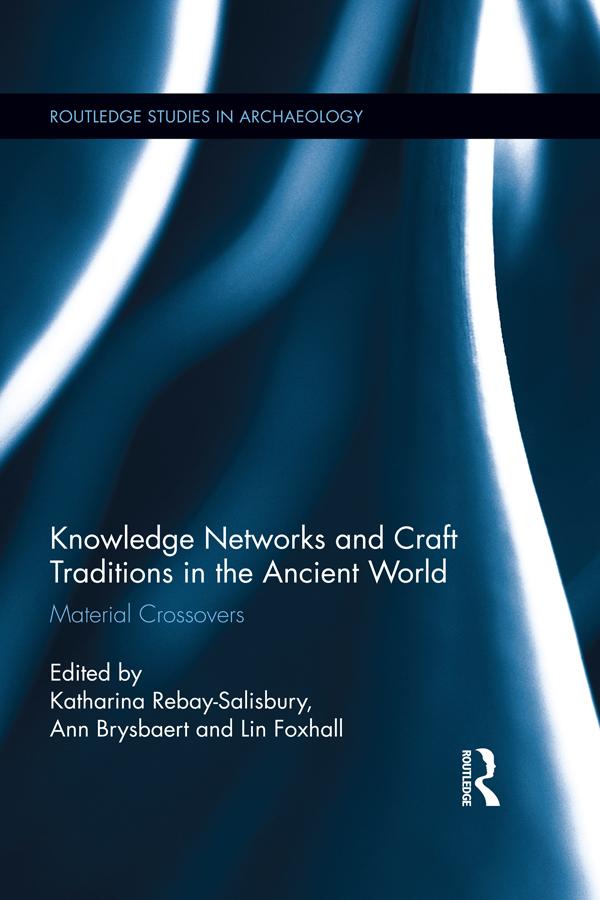
This edited volume investigates knowledge networks based on materials and associated technologies in Prehistoric Europe and the Classical Mediterranean. It emphasises the significance of material objects to the construction, maintenance, and collapse of networks of various forms – which are central to explanations of cultural contact and change. Focusing on the materiality of objects and on the way in which materials are used adds a multidimensional quality to networks. The properties, functions, and styles of different materials are intrinsically linked to the way in which knowledge flows and technologies are transmitted. Transmission of technologies from one craft to another is one of the main drivers of innovation, whilst sharing knowledge is enabled and limited by the extent of associated social networks in place.
Archaeological research has often been limited to studying objects made of one particular material in depth, be it lithic materials, ceramics, textiles, glass, metal, wood or others. The knowledge flow and transfer between crafts that deal with different materials have often been overlooked. This book takes a fresh approach to the reconstruction of knowledge networks by integrating two or more craft traditions in each of its chapters. The authors, well-known experts and early career researchers, provide concise case studies that cover a wide range of materials. The scope of the book extends from networks of craft traditions to implications for society in a wider sense: materials, objects, and the technologies used to make and distribute them are interwoven with social meaning. People make objects, but objects make people – the materiality of objects shapes our understanding of the world and our place within it. In this book, objects are treated as clues to social networks of different sorts that can be contrasted and compared, both spatially and diachronically.
Płać wygodnie kartą, Klarną, Apple Pay lub Google Pay. Nie jesteś zadowolony? Zawsze masz 14-dniową gwarancję zwrotu pieniędzy. Więcej przeczytasz w naszych warunkach. Masz pytania? Napisz do nas na hello@memmo.org.
Memmo ułatwia naukę – gdziekolwiek jesteś na świecie. U nas znajdziesz podręczniki i sprytne narzędzia do nauki w jednym miejscu: streszczenia, quizy, podcasty i fiszki. A do tego Ted, Twój kumpel do nauki, który odpowie na wszystko, co Cię nurtuje. Ponad 50 000 studentów już tu się uczy – stworzone, byś uczył się szybciej i mniej stresował.