
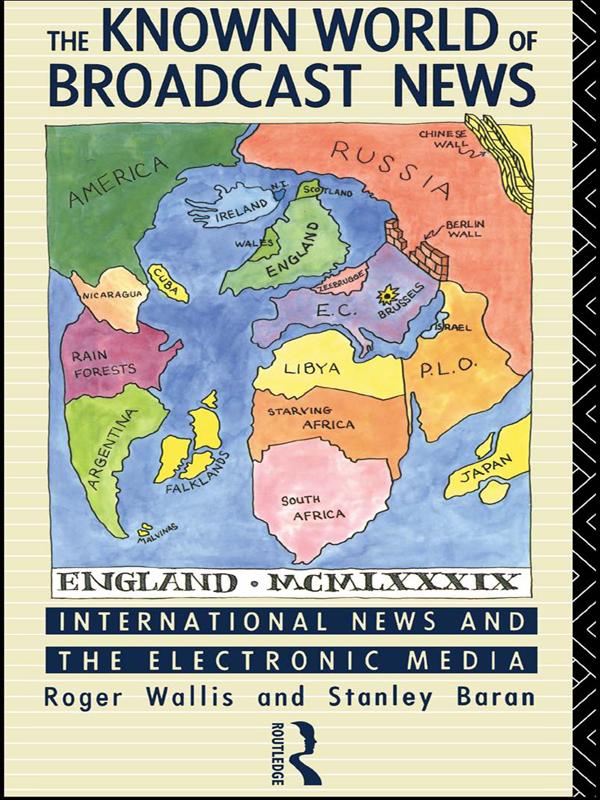
Radio and television news are expanding everywhere, often at the expense of print media. Developments in global communications, in theory at least, have made the world smaller. An event anywhere can theoretically be reported anywhere else on radio within minutes; on television within hours. But theory and practice are often far apart. Broadcast News has become a global business, almost like the music industry, with its own 'Top 10' and an inevitable streamlining of taste. A few major organisations control the newsflow. Syndicators guarantee that more and more of us get to see or hear the same stories. This is typified by the growth of independent or local news stations, and cable suppliers, competing mercilessly with the traditional giants of the news airwaves (the US Networks, the BBC and other Public Service Broadcasters, etc.). But does this development satisfy the democratic demands of enlightened society and of informed citizens? This book presents a catalogue of worries, but also some rays of hope. It looks in detail at news broadcasters on both sides of the Atlantic. It also covers the international broadcasting scene as well as third world countries and recent developments in Glasnost's USSR. A major empirical study of what we get from broadcast news (taking the case of the USA, Britain and Sweden) is also presented. Models useful for understanding both the present and the future are suggested.
Płać wygodnie kartą, Klarną, Apple Pay lub Google Pay. Nie jesteś zadowolony? Zawsze masz 14-dniową gwarancję zwrotu pieniędzy. Więcej przeczytasz w naszych warunkach. Masz pytania? Napisz do nas na hello@memmo.org.
Memmo ułatwia naukę – gdziekolwiek jesteś na świecie. U nas znajdziesz podręczniki i sprytne narzędzia do nauki w jednym miejscu: streszczenia, quizy, podcasty i fiszki. A do tego Ted, Twój kumpel do nauki, który odpowie na wszystko, co Cię nurtuje. Ponad 50 000 studentów już tu się uczy – stworzone, byś uczył się szybciej i mniej stresował.
Może Ci się spodobać
Kup książkę0