
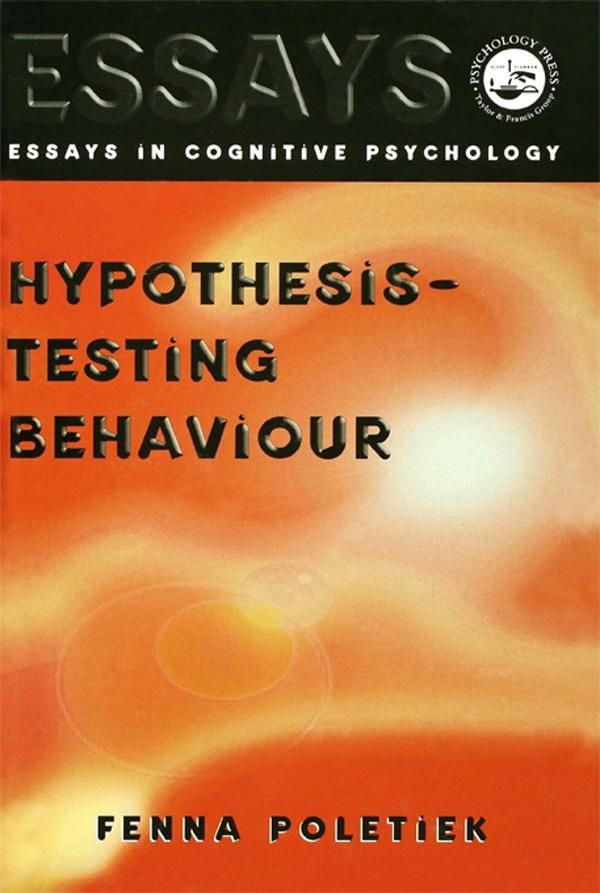
How do people search evidence for a hypothesis? A well documented answer in cognitive psychology is that they search for confirming evidence. However, the rational strategy is to try to falsify the hypothesis. This book critically evaluates this contradiction. Experimental research is discussed against the background of philosophical and formal theories of hypothesis testing with striking results: Falsificationism and verificationism - the two main rival philosophies of testing - come down to one and the same principle for concrete testing behaviour, eluding the contrast between rational falsification and confirmation bias.
In this book, the author proposes a new perspective for describing hypothesis testing behaviour - the probability-value model - which unifies the contrasting views. According to this model, hypothesis testers pragmatically consider what evidence and how much evidence will convince them to reject or accept the hypothesis. They might either require highly probative evidence for its acceptance, at the risk of its rejection, or protect it against rejection and go for minor confirming observations. Interestingly, the model refines the classical opposition between rationality and pragmaticity because pragmatic considerations are a legitimate aspect of 'rational' hypothesis testing. Possible future research and applications of the ideas advanced are discussed, such as the modelling of expert hypothesis testing.
Płać wygodnie kartą, Klarną, Apple Pay lub Google Pay. Nie jesteś zadowolony? Zawsze masz 14-dniową gwarancję zwrotu pieniędzy. Więcej przeczytasz w naszych warunkach. Masz pytania? Napisz do nas na hello@memmo.org.
Memmo ułatwia naukę – gdziekolwiek jesteś na świecie. U nas znajdziesz podręczniki i sprytne narzędzia do nauki w jednym miejscu: streszczenia, quizy, podcasty i fiszki. A do tego Ted, Twój kumpel do nauki, który odpowie na wszystko, co Cię nurtuje. Ponad 50 000 studentów już tu się uczy – stworzone, byś uczył się szybciej i mniej stresował.
Może Ci się spodobać
Kup książkę0