
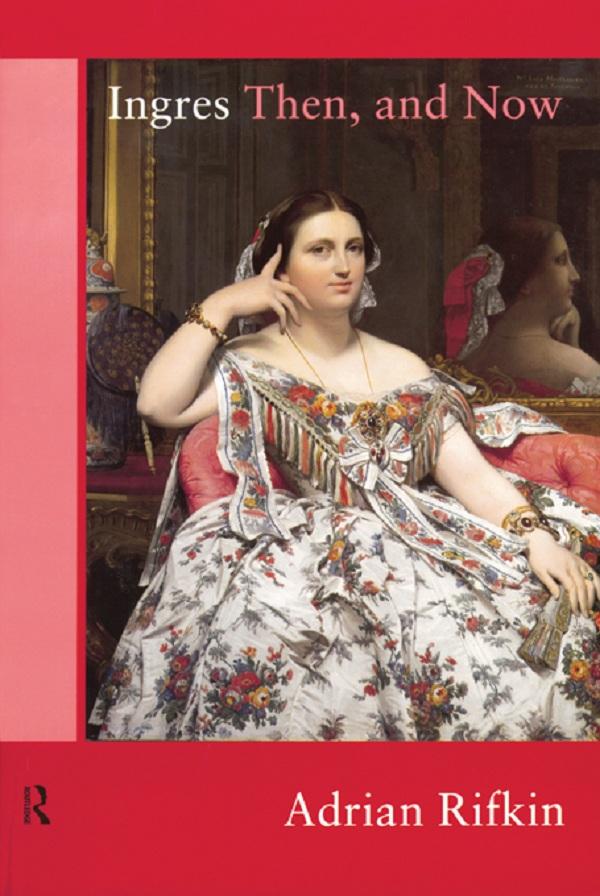
Ingres Then, and Now is an innovative study of one of the best-known French artists of the nineteenth century, Jean Auguste Dominique Ingres. Adrian Rifkin re-evaluates Ingres' work in the context of a variety of literary, musical and visual cultures which are normally seen as alien to him. Re-viewing Ingres' paintings as a series of fragmentary symptoms of the commodity cultures of nineteenth-century Paris, Adrian Rifkin draws the artist away from his familiar association with the Academy and the Salon.
Rifkin sets out to show how, by thinking of the historical archive as a form of the unconscious, we can renew our understanding of nineteenth-century conservative or academic cultures by reading them against their 'other'. He situates Ingres in the world of the Parisian Arcades, as represented by Walter Benjamin, and examines the effect of this juxtaposition on how we think of Benjamin himself, following Ingres' image in popular cultures of the twentieth century. Rifkin then returns to the late eighteenth and early nineteenth centuries to find traces of the emergence of bizarre symptoms in Ingres' early work, symptoms which open him to a variety of conflicting readings and appropriations. It concludes by examining his importance for the great French art critic Jean Cassou on the one hand, and in making a bold, contemporary gay appropriation on the other.
Ingres Then, and Now transforms the popular image we have of Ingres. It argues that the figure of the artist is neither fixed in time or place - there is neither an essential man named Ingres, nor a singular body of his work - but is an effect of many, complex and overlapping historical effects.
Płać wygodnie kartą, Klarną, Apple Pay lub Google Pay. Nie jesteś zadowolony? Zawsze masz 14-dniową gwarancję zwrotu pieniędzy. Więcej przeczytasz w naszych warunkach. Masz pytania? Napisz do nas na hello@memmo.org.
Memmo ułatwia naukę – gdziekolwiek jesteś na świecie. U nas znajdziesz podręczniki i sprytne narzędzia do nauki w jednym miejscu: streszczenia, quizy, podcasty i fiszki. A do tego Ted, Twój kumpel do nauki, który odpowie na wszystko, co Cię nurtuje. Ponad 50 000 studentów już tu się uczy – stworzone, byś uczył się szybciej i mniej stresował.