
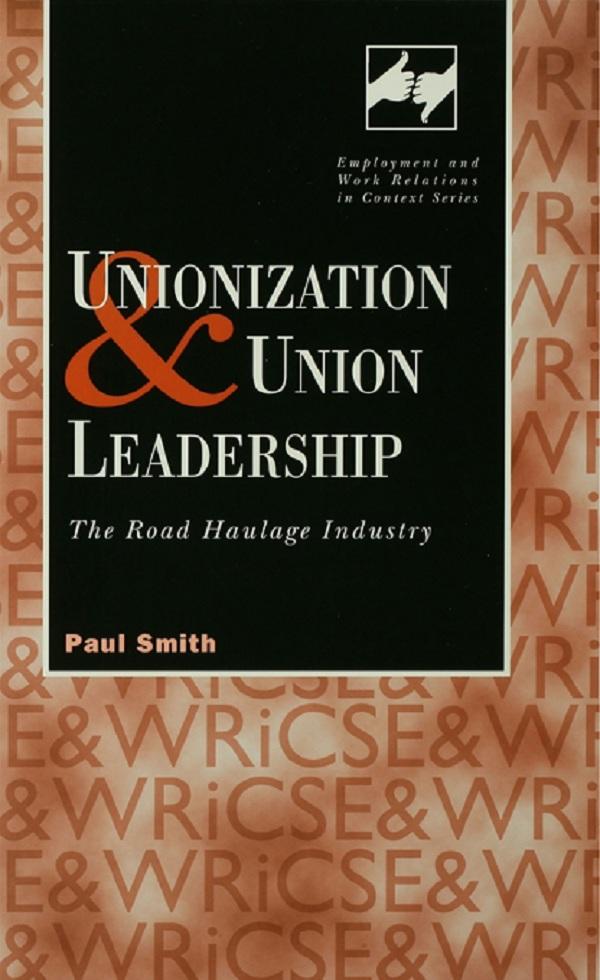
The focus of this book is the process of unionization in the road haulage industry, in particular, the role of leadership in determining the quality of union organization. It analyzes the early history of road haulage unions, the creation of the TGWU, the failure to organize the industry during the 1930s and the consequent reliance upon statutory regulation of wages and conditions, and the subsequent institutional stasis of the TGWU during the 1950s. The transformation and expansion of union organization during the period of 1963-1973, conceived as the mobilization of collective power by workers within the employment relationship, is explored in case studies of TGWU branches in Birmingham, Liverpool and London, and within the wider context of TGWU. The retrenchment of union organization as a result of recession and Conservative government legislation, 1980-1994, is explored. The book concludes with an assessment of theories of unionization and democracy, and the role of leadership, with reference to the historical development of British trade unionism. The research utilizes oral and documentary sources, including hitherto unused archives of the TGWU and the Road Haulage Association.
Płać wygodnie kartą, Klarną, Apple Pay lub Google Pay. Nie jesteś zadowolony? Zawsze masz 14-dniową gwarancję zwrotu pieniędzy. Więcej przeczytasz w naszych warunkach. Masz pytania? Napisz do nas na hello@memmo.org.
Memmo ułatwia naukę – gdziekolwiek jesteś na świecie. U nas znajdziesz podręczniki i sprytne narzędzia do nauki w jednym miejscu: streszczenia, quizy, podcasty i fiszki. A do tego Ted, Twój kumpel do nauki, który odpowie na wszystko, co Cię nurtuje. Ponad 50 000 studentów już tu się uczy – stworzone, byś uczył się szybciej i mniej stresował.
Może Ci się spodobać
Kup książkę0