
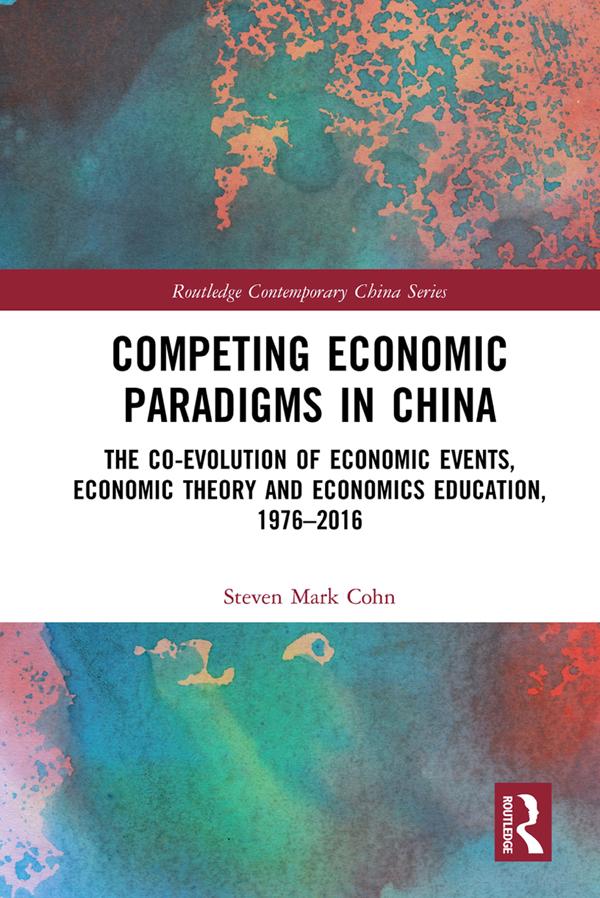
When the Chinese economic reforms began in 1978, Marxist economics infused all the institutions of economic theory in China, from academic departments and economics journals to government departments and economic think tanks. By the year 2000, neoclassical economics dominated these institutions and organized most economic discussion. This book explains how and why neoclassical economic theory replaced Marxist economic theory as the dominant economics paradigm in China. It rejects the idea that the rise of neoclassical theory was a triumph of reason over ideology, and instead, using a sociology of knowledge approach, links the rise of neoclassical economics to broad ideological currents and to the political-economic projects that key social groups inside and outside China wanted to enable. The book concludes with a discussion of the nature of economic theory and economics education in China today.
Płać wygodnie kartą, Klarną, Apple Pay lub Google Pay. Nie jesteś zadowolony? Zawsze masz 14-dniową gwarancję zwrotu pieniędzy. Więcej przeczytasz w naszych warunkach. Masz pytania? Napisz do nas na hello@memmo.org.
Memmo ułatwia naukę – gdziekolwiek jesteś na świecie. U nas znajdziesz podręczniki i sprytne narzędzia do nauki w jednym miejscu: streszczenia, quizy, podcasty i fiszki. A do tego Ted, Twój kumpel do nauki, który odpowie na wszystko, co Cię nurtuje. Ponad 50 000 studentów już tu się uczy – stworzone, byś uczył się szybciej i mniej stresował.
Może Ci się spodobać
Kup książkę0