
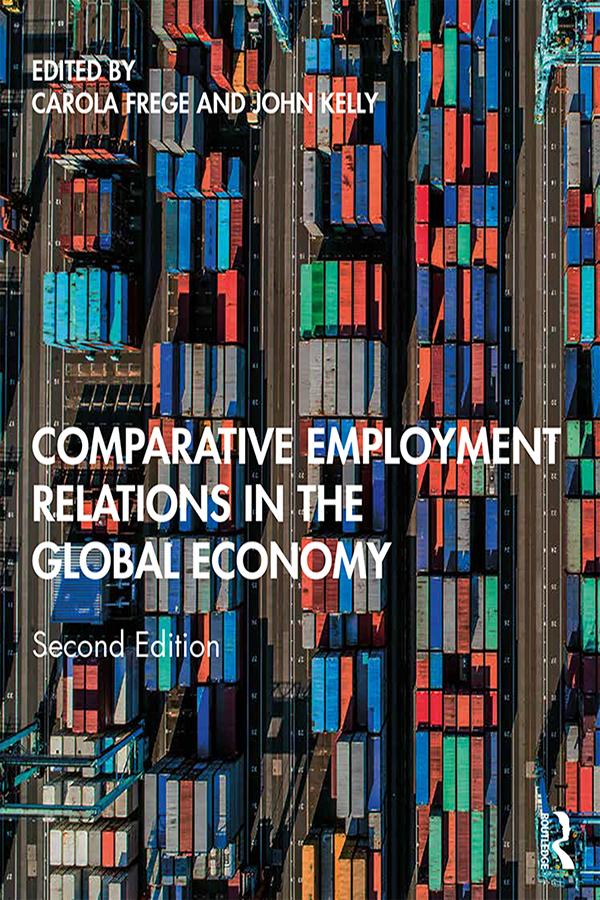
Employment Relations is widely taught in business schools around the world. However, an increasing emphasis is being placed on the comparative and international dimensions of the relationships between employers and workers. It is becoming crucial to consider today’s work and employment issues alongside the dynamics between global financial and product markets, global production chains, national and international employment actors and institutions, and the ways in which these relationships play out in different national contexts.
Comparative Employment Relations in the Global Economy addresses this need by presenting a cross-section of country studies – including the UK, Germany, USA, Brazil, India, Russia, China and South Africa – alongside integrative thematic chapters covering essential topics such as theoretical approaches, collective representation and employment regulation.
This second edition benefits from:
- Careful updates to theory and real-life developments
- Fuller treatment of topics such as labour migration, gender and discrimination, global value chains and corporate governance
- A more logical ordering of chapters, with globalization issues appearing earlier
This textbook is the perfect resource for students on advanced undergraduate and postgraduate comparative and international programmes across areas such as employment relations, industrial relations, human resource management, political economy, labour politics, industrial and economic sociology, regulation and social policy.
Płać wygodnie kartą, Klarną, Apple Pay lub Google Pay. Nie jesteś zadowolony? Zawsze masz 14-dniową gwarancję zwrotu pieniędzy. Więcej przeczytasz w naszych warunkach. Masz pytania? Napisz do nas na hello@memmo.org.
Memmo ułatwia naukę – gdziekolwiek jesteś na świecie. U nas znajdziesz podręczniki i sprytne narzędzia do nauki w jednym miejscu: streszczenia, quizy, podcasty i fiszki. A do tego Ted, Twój kumpel do nauki, który odpowie na wszystko, co Cię nurtuje. Ponad 50 000 studentów już tu się uczy – stworzone, byś uczył się szybciej i mniej stresował.