
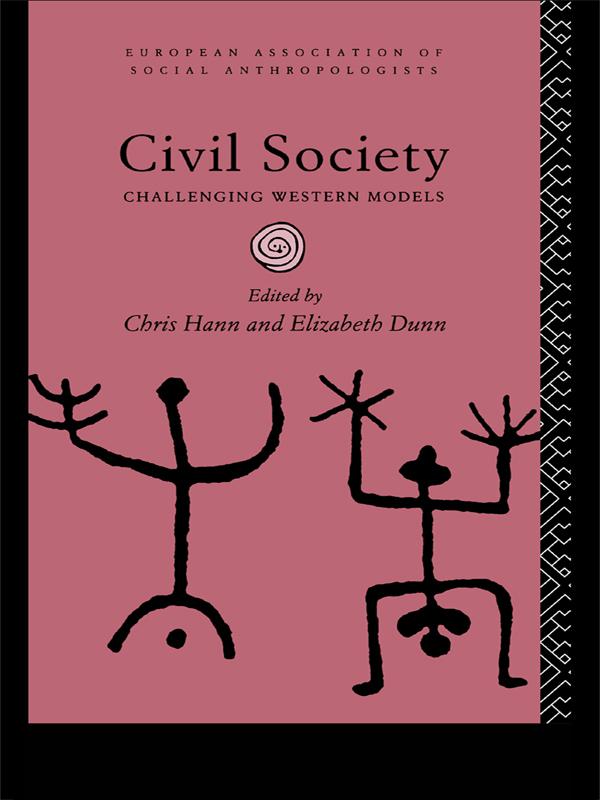
Between kinship ties on the one hand and the state on the other, human beings experience a diversity of social relationships and groupings which in modern western thought have come to be gathered under the label 'civil society'. A liberal-individualist model of civil society has become fashionable in recent years, but what can such a term mean in the late twentieth century?
Civil Society argues that civil society should not be studied as a separate, 'private' realm clearly separated in opposition to the state; nor should it be confined to the institutions of the 'voluntary' or 'non-governmental' sector. A broader understanding of civil society involves the investigation of everyday social practices, often elusive power relations and the shared moralities that hold communities together. By drawing on case materials from a range of contemporary societies, including the US, Britain, four of the former Communist countries of Eastern Europe, Turkey and the Middle and Far East, Civil Society demonstrates what anthropology contributes to debates taking place throughout the social sciences; adding up to an exciting renewal of the agenda for political anthropology.
Płać wygodnie kartą, Klarną, Apple Pay lub Google Pay. Nie jesteś zadowolony? Zawsze masz 14-dniową gwarancję zwrotu pieniędzy. Więcej przeczytasz w naszych warunkach. Masz pytania? Napisz do nas na hello@memmo.org.
Memmo ułatwia naukę – gdziekolwiek jesteś na świecie. U nas znajdziesz podręczniki i sprytne narzędzia do nauki w jednym miejscu: streszczenia, quizy, podcasty i fiszki. A do tego Ted, Twój kumpel do nauki, który odpowie na wszystko, co Cię nurtuje. Ponad 50 000 studentów już tu się uczy – stworzone, byś uczył się szybciej i mniej stresował.