
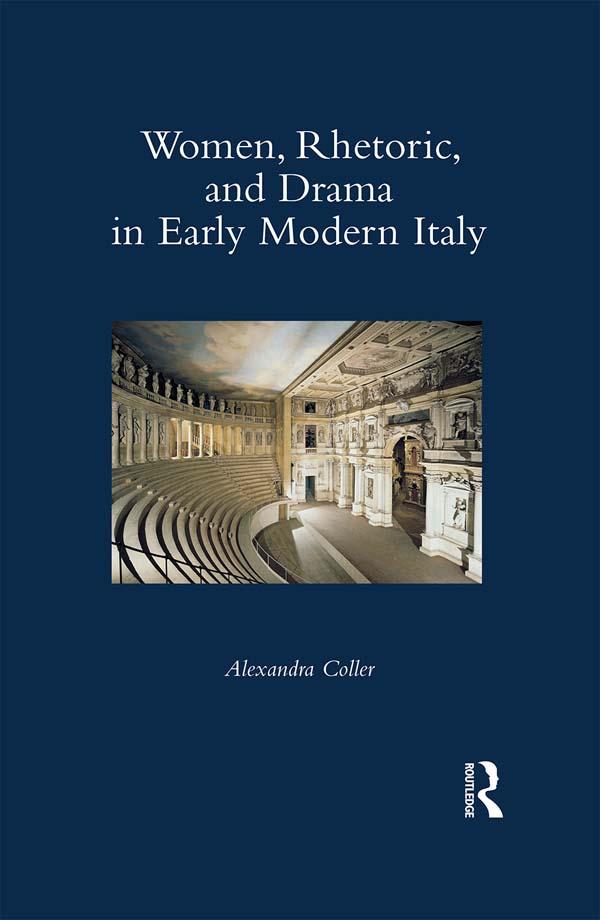
Sixteenth-century Italy witnessed the rebirth of comedy, tragedy, and tragicomedy in the pastoral mode. Traditionally, we think of comedy and tragedy as remakes of ancient models, and tragicomedy alone as the invention of the moderns. Women, Rhetoric, and Drama in Early Modern Italy suggests that all three genres were, in fact, remarkably new, if dramatists’ intriguingly sympathetic portrayals of and sustained investment in women as vibrant and dynamic characters of the early modern stage are taken into account. This study examines the role of rhetoric and gender in early modern Italian drama, in itself and in order to explore its complex interrelationship with the rise of women writers and the role women played in Italian culture and society, while at the same time demonstrating just how closely intertwined history, culture, and dramatic writing are. Author Alexandra Coller focuses on the scripted/erudite plays of the sixteenth and first half of the seventeenth centuries, which, she argues, are indispensable for a balanced view of the history of drama and its place within contemporary literary and women’s studies. As this book reveals, the ascendancy of comedy, tragedy, and tragicomedy in the vernacular seems to have been not only inextricably linked to but also dependent on the rise of women as prominent stage characters and, eventually, as authors in their own right.
Płać wygodnie kartą, Klarną, Apple Pay lub Google Pay. Nie jesteś zadowolony? Zawsze masz 14-dniową gwarancję zwrotu pieniędzy. Więcej przeczytasz w naszych warunkach. Masz pytania? Napisz do nas na hello@memmo.org.
Memmo ułatwia naukę – gdziekolwiek jesteś na świecie. U nas znajdziesz podręczniki i sprytne narzędzia do nauki w jednym miejscu: streszczenia, quizy, podcasty i fiszki. A do tego Ted, Twój kumpel do nauki, który odpowie na wszystko, co Cię nurtuje. Ponad 50 000 studentów już tu się uczy – stworzone, byś uczył się szybciej i mniej stresował.