
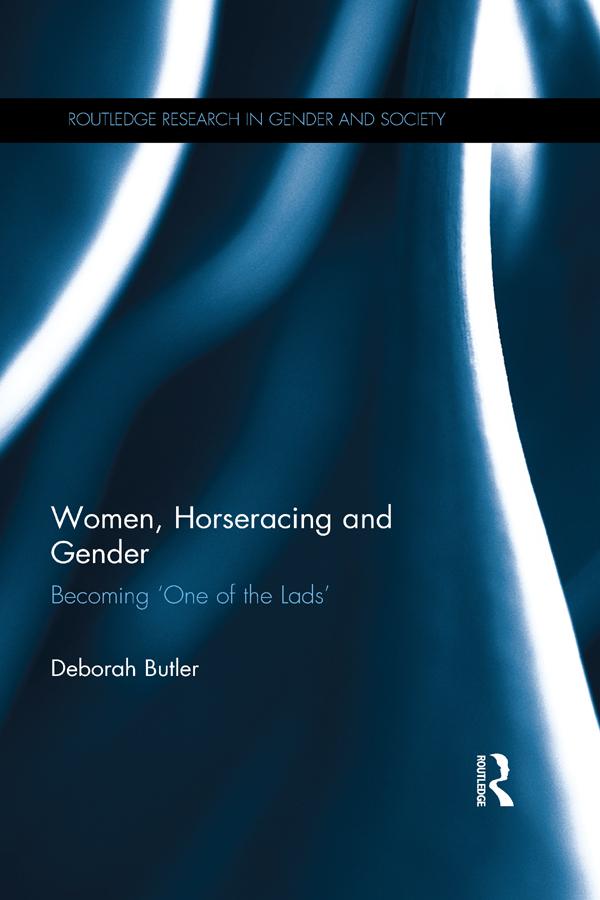
How do the class and gender inequalities found in horseracing affect the working practices of women within the industry? Drawing on the work of Bourdieu and his concepts of field, capital and habitus, this book shows the inequalities that are prevalent within the world of racing, both historically and currently, by illustrating the classed and gendered nature of racing and how it has developed since the eighteenth century when it was the sport of the aristocracy. Using research obtained through her year-long ethnographic study of a racing yard, Deborah Butler demonstrates that the racing field is an arena of power conflicts, and that men and women who work in racing acquire a contradictorily gendered racing habitus. This is achieved by learning certain elements in a formal setting but mainly informally, by ‘doing’, developing practical skills and participating in a (gendered) community of practice. For female stable staff this means adapting their behaviour and working practices in order to be accepted as ‘one of the lads’. This book will appeal to both scholars and students of the sociology of sport, the sociology of work and gender studies.
Płać wygodnie kartą, Klarną, Apple Pay lub Google Pay. Nie jesteś zadowolony? Zawsze masz 14-dniową gwarancję zwrotu pieniędzy. Więcej przeczytasz w naszych warunkach. Masz pytania? Napisz do nas na hello@memmo.org.
Memmo ułatwia naukę – gdziekolwiek jesteś na świecie. U nas znajdziesz podręczniki i sprytne narzędzia do nauki w jednym miejscu: streszczenia, quizy, podcasty i fiszki. A do tego Ted, Twój kumpel do nauki, który odpowie na wszystko, co Cię nurtuje. Ponad 50 000 studentów już tu się uczy – stworzone, byś uczył się szybciej i mniej stresował.