
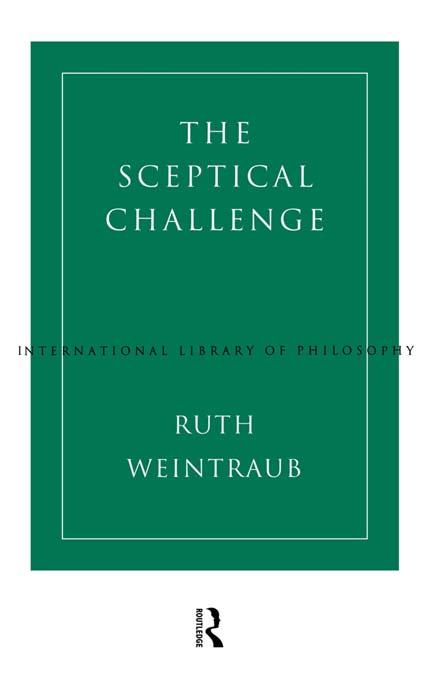
Do we really know the things we think we know? Are any of our beliefs reasonable? Scepticism gives a pessimistic reply to these important epistemological questions - we don't know anything; none of our beliefs are reasonable. But can such a seemingly paradoxical claim be more than an intellectual curiousity? And if it is, can it be refuted? Ruth Weintraub answers yes to both these questions.
The sceptical challenge is a formidable one, and should be confronted, not dismissed. The theoretical and practical difficulties it presents - in that the sceptical life cannot be lived, and the doctrine seems self-defeating - are in fact superficial, according to Ruth Weintraub. Her study looks at the sceptical arguments of Descartes, Hume and the ancient Greek sceptic, Sextus Empiricus. The author argues that by drawing on philosophy, rather than science, the sceptical challenge can be answered.
The Sceptical Challenge is a bold and original response to scepticism; it represents a new way of looking at the field for philosophers of epistemology.
Płać wygodnie kartą, Klarną, Apple Pay lub Google Pay. Nie jesteś zadowolony? Zawsze masz 14-dniową gwarancję zwrotu pieniędzy. Więcej przeczytasz w naszych warunkach. Masz pytania? Napisz do nas na hello@memmo.org.
Memmo ułatwia naukę – gdziekolwiek jesteś na świecie. U nas znajdziesz podręczniki i sprytne narzędzia do nauki w jednym miejscu: streszczenia, quizy, podcasty i fiszki. A do tego Ted, Twój kumpel do nauki, który odpowie na wszystko, co Cię nurtuje. Ponad 50 000 studentów już tu się uczy – stworzone, byś uczył się szybciej i mniej stresował.