
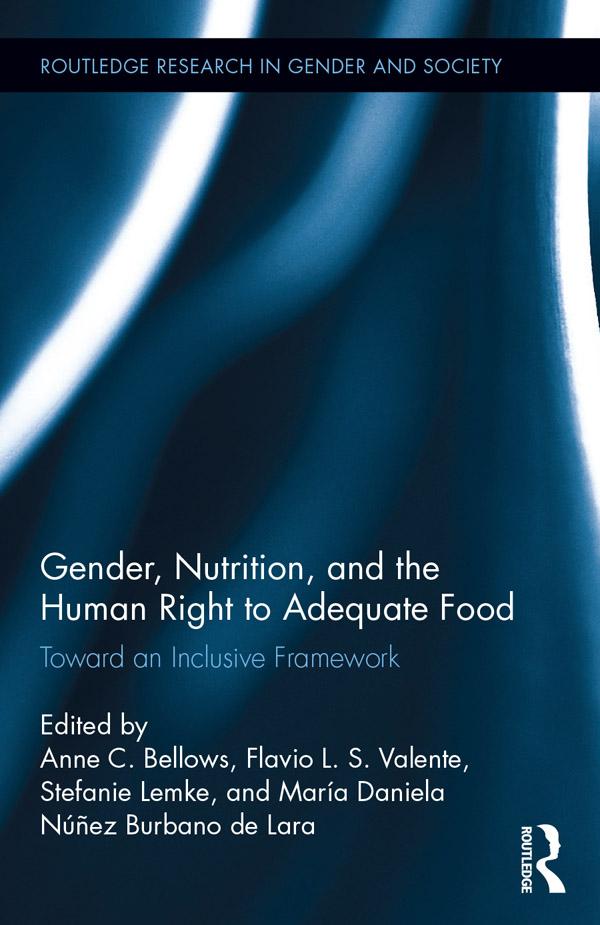
This book introduces the human right to adequate food and nutrition as evolving concept and identifies two structural "disconnects" fueling food insecurity for a billion people, and disproportionally affecting women, children, and rural food producers: the separation of women’s rights from their right to adequate food and nutrition, and the fragmented attention to food as commodity and the medicalization of nutritional health. Three conditions arising from these disconnects are discussed: structural violence and discrimination frustrating the realization of women’s human rights, as well as their private and public contributions to food and nutrition security for all; many women’s experience of their and their children’s simultaneously independent and intertwined subjectivities during pregnancy and breastfeeding being poorly understood in human rights law and abused by poorly-regulated food and nutrition industry marketing practices; and the neoliberal economic system’s interference both with the autonomy and self-determination of women and their communities and with the strengthening of sustainable diets based on democratically governed local food systems. The book calls for a social movement-led reconceptualization of the right to adequate food toward incorporating gender, women’s rights, and nutrition, based on the food sovereignty framework.
Płać wygodnie kartą, Klarną, Apple Pay lub Google Pay. Nie jesteś zadowolony? Zawsze masz 14-dniową gwarancję zwrotu pieniędzy. Więcej przeczytasz w naszych warunkach. Masz pytania? Napisz do nas na hello@memmo.org.
Memmo ułatwia naukę – gdziekolwiek jesteś na świecie. U nas znajdziesz podręczniki i sprytne narzędzia do nauki w jednym miejscu: streszczenia, quizy, podcasty i fiszki. A do tego Ted, Twój kumpel do nauki, który odpowie na wszystko, co Cię nurtuje. Ponad 50 000 studentów już tu się uczy – stworzone, byś uczył się szybciej i mniej stresował.