
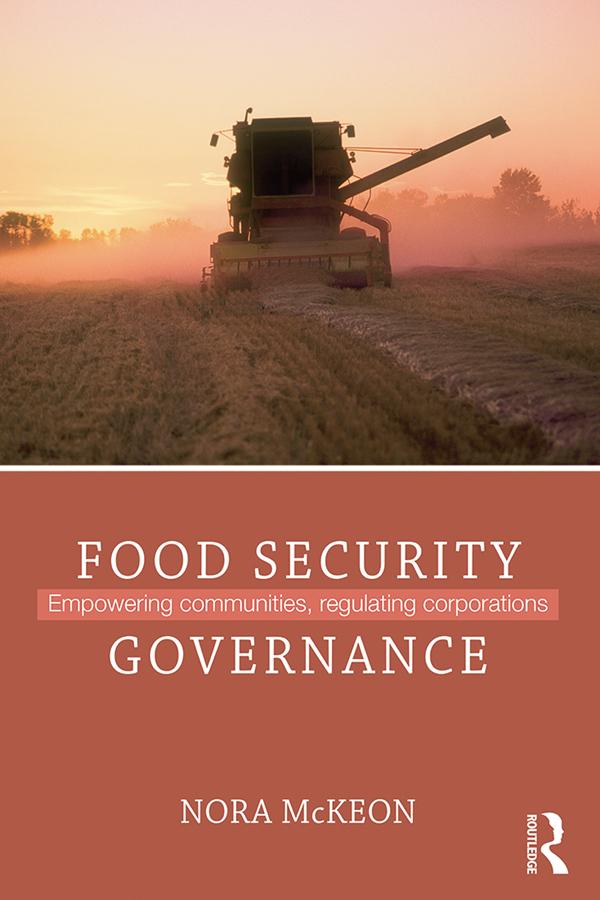
This book fills a gap in the literature by setting food security in the context of evolving global food governance.
Today’s food system generates hunger alongside of food waste, burgeoning health problems, massive greenhouse gas emissions. Applying food system analysis to review how the international community has addressed food issues since World War II, this book proceeds to explain how actors link up in corporate global food chains and in the local food systems that feed most of the world’s population. It unpacks relevant paradigms – from productivism to food sovereignty – and highlights the significance of adopting a rights-based approach to solving food problems. The author describes how communities around the world are protecting their access to resources and building better ways of producing and accessing food, and discusses the reformed Committee on World Food Security, a uniquely inclusive global policy forum, and how it could be supportive of efforts from the base. The book concludes by identifying terrains on which work is needed to adapt the practice of the democratic public sphere and accountable governance to a global dimension and extend its authority to the world of markets and corporations.
This book will be of interest to students of food security, global governance, development studies and critical security studies in general.
Płać wygodnie kartą, Klarną, Apple Pay lub Google Pay. Nie jesteś zadowolony? Zawsze masz 14-dniową gwarancję zwrotu pieniędzy. Więcej przeczytasz w naszych warunkach. Masz pytania? Napisz do nas na hello@memmo.org.
Memmo ułatwia naukę – gdziekolwiek jesteś na świecie. U nas znajdziesz podręczniki i sprytne narzędzia do nauki w jednym miejscu: streszczenia, quizy, podcasty i fiszki. A do tego Ted, Twój kumpel do nauki, który odpowie na wszystko, co Cię nurtuje. Ponad 50 000 studentów już tu się uczy – stworzone, byś uczył się szybciej i mniej stresował.