
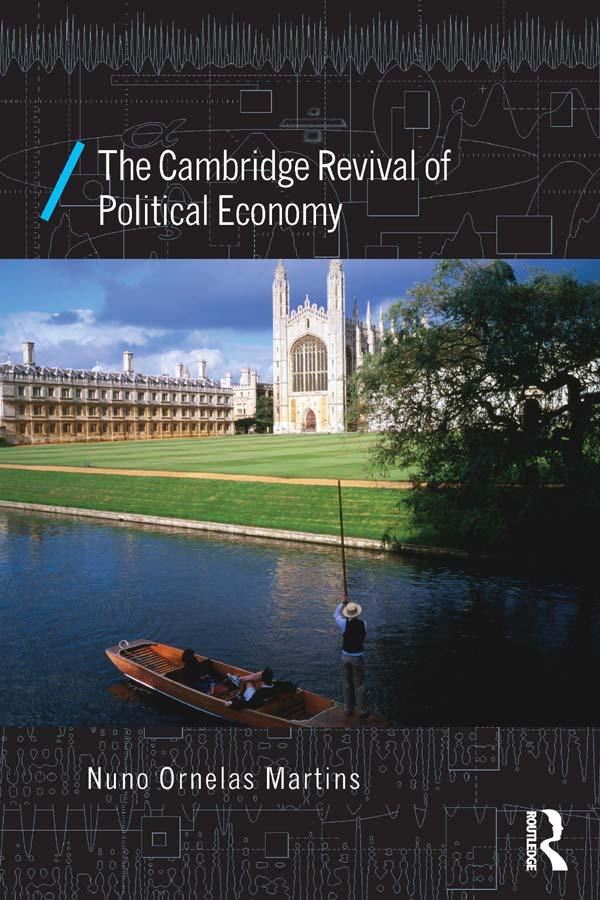
The marginalist revolution of the late nineteenth century consolidated what Karl Marx and Piero Sraffa called ‘vulgar economy’, bringing with it an emphasis on a scarcity theory that replaced the classical surplus theory. However, the classical political economy of Adam Smith and David Ricardo has been revived within the Cambridge economic tradition. This book looks at how different branches of the Cambridge economic tradition have focused on various aspects of this revival over time.
The author shows that classical political economy is distinct from vulgar political economy in terms of its economic, social, and ethical theory, with each difference resting on an issue of ontology. Structured in three parts, the book examines the central contested aspects of these theories, namely the nature of value, the relationship between human beings and social structure, and the nature of human wellbeing.
The Cambridge Revival of Political Economy will be relevant to students and researchers within the fields of political economy, history of economic thought, politics and philosophy.
Płać wygodnie kartą, Klarną, Apple Pay lub Google Pay. Nie jesteś zadowolony? Zawsze masz 14-dniową gwarancję zwrotu pieniędzy. Więcej przeczytasz w naszych warunkach. Masz pytania? Napisz do nas na hello@memmo.org.
Memmo ułatwia naukę – gdziekolwiek jesteś na świecie. U nas znajdziesz podręczniki i sprytne narzędzia do nauki w jednym miejscu: streszczenia, quizy, podcasty i fiszki. A do tego Ted, Twój kumpel do nauki, który odpowie na wszystko, co Cię nurtuje. Ponad 50 000 studentów już tu się uczy – stworzone, byś uczył się szybciej i mniej stresował.