
Zanim poznałem Memmo, moje notatki były rozrzucone po PDF-ach. Teraz obszar roboczy zbiera wszystko w jednym miejscu — widzę dokładnie, co jeszcze muszę powtórzyć.
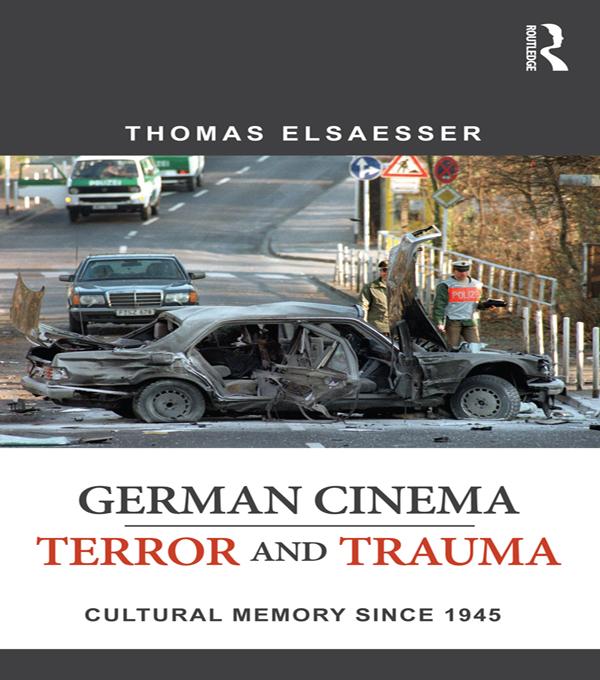
In German Cinema – Terror and Trauma Since 1945, Thomas Elsaesser reevaluates the meaning of the Holocaust for postwar German films and culture, while offering a reconsideration of trauma theory today. Elsaesser argues that Germany's attempts at "mastering the past" can be seen as both a failure and an achievement, making it appropriate to speak of an ongoing 'guilt management' that includes not only Germany, but Europe as a whole. In a series of case studies, which consider the work of Konrad Wolf, Alexander Kluge, Rainer Werner Fassbinder, Herbert Achterbusch and Harun Farocki, as well as films made in the new century, Elsaesser tracks the different ways the Holocaust is present in German cinema from the 1950s onwards, even when it is absent, or referenced in oblique and hyperbolic ways. Its most emphatically "absent presence" might turn out to be the compulsive afterlife of the Red Army Faction, whose acts of terror in the 1970s were a response to—as well as a reminder of—Nazism’s hold on the national imaginary. Since the end of the Cold War and 9/11, the terms of the debate around terror and trauma have shifted also in Germany, where generational memory now distributes the roles of historical agency and accountability differently. Against the background of universalized victimhood, a cinema of commemoration has, if anything, confirmed the violence that the past continues to exert on the present, in the form of missed encounters, retroactive incidents, unintended slippages and uncanny parallels, which Elsaesser—reviving the full meaning of Freud’s Fehlleistung—calls the parapractic performativity of cultural memory.
Zanim poznałem Memmo, moje notatki były rozrzucone po PDF-ach. Teraz obszar roboczy zbiera wszystko w jednym miejscu — widzę dokładnie, co jeszcze muszę powtórzyć.
Podsumowania Memmo to złoto przed egzaminami. Nie muszę czytać 800 stron dwa tygodnie wcześniej — tylko to, co najważniejsze.
Czat AI uratował mnie niejeden raz w noc przed egzaminem. Pytam, dopóki nie zrozumiem — i nie muszę czekać na odpowiedź od grupy studyjnej.
Quizy trafiają w punkt, jeśli chodzi o to, co muszę wiedzieć. Memmo śledzi, na czym się zacinam — więc ćwiczę tylko to, co naprawdę się liczy.
Fiszki z powtórkami rozłożonymi w czasie to magia. Memmo wie, kiedy mam coś zapomnieć i przypomina mi o tym.
Podcasty AI to mój faworyt. Słucham w drodze do szkoły i powtarzam materiał, nie siedząc przed komputerem.

Handbok i kvalitativa metoder
281 kr

Hållbar utveckling: en introduktion för ingenjörer och andra problemlösare
334 kr

Brymans Samhällsvetenskapliga metoder
390 kr

Projektledning
491 kr

Den orättvisa hälsan: om socioekonomiska skillnader i hälsa och livslängd
326 kr

Organizational Leadership
429 kr

Vetenskapsteori för nybörjare
196 kr

På väg mot läraryrket
172 kr

Det sociala livet i skolan: Socialpsykologiska perspektiv
253 kr

Betygsättningens didaktik
151 kr

Personality
402 kr

Studying Leadership
404 kr

Managing Innovation
477 kr

Introduktion till samhällsvetenskaplig metod
347 kr

The Psychology of Sex and Gender
698 kr

Introduction to Leadership
605 kr

Evidens och kunskap för socialt arbete
207 kr