
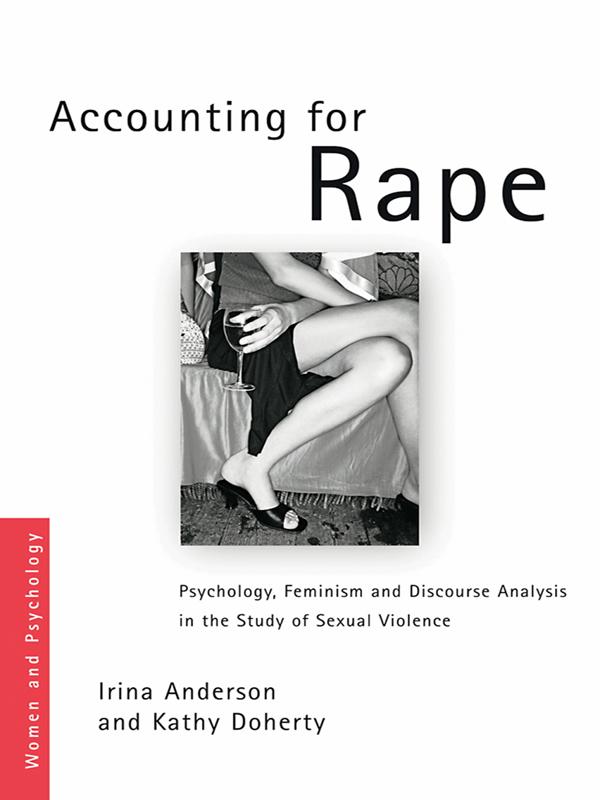
Accounting for Rape presents an original perspective on the subject of rape, focusing on both female and male sexual violence. The authors investigate everyday beliefs about rape, to examine how blaming the victim and the normalization of rape are achieved by people in a discussion about sexual violence. They synthesize discursive psychology and a feminist standpoint to explore precisely how rape and rape victimhood are defined in ways that reflect the social, political and cultural conditions of society.
By analysing conversational data, Anderson and Doherty suggest that the existing social psychological experimental research into rape and rape perception fails to analyse the subtlety and political significance of rape supportive reasoning. Accounting for Rape provides a critical interrogation of the dominant theories and methodologies, focusing on:
- How the gender and sexual orientation of alleged victims and perpetrators is crucial to social participants when making sense of a rape report and in apportioning blame and sympathy
- How arguments that are critical of alleged victims are built in ways that are 'face saving' for the participants in the conversations, and how victim-blaming arguments are presented as 'common sense'.
- The potential of applying this approach in both professional and academic contexts to promote attitude change.
The book will be of great interest to those studying social and clinical psychology, cultural studies, sociology, women's studies and communication studies.
Płać wygodnie kartą, Klarną, Apple Pay lub Google Pay. Nie jesteś zadowolony? Zawsze masz 14-dniową gwarancję zwrotu pieniędzy. Więcej przeczytasz w naszych warunkach. Masz pytania? Napisz do nas na hello@memmo.org.
Memmo ułatwia naukę – gdziekolwiek jesteś na świecie. U nas znajdziesz podręczniki i sprytne narzędzia do nauki w jednym miejscu: streszczenia, quizy, podcasty i fiszki. A do tego Ted, Twój kumpel do nauki, który odpowie na wszystko, co Cię nurtuje. Ponad 50 000 studentów już tu się uczy – stworzone, byś uczył się szybciej i mniej stresował.