
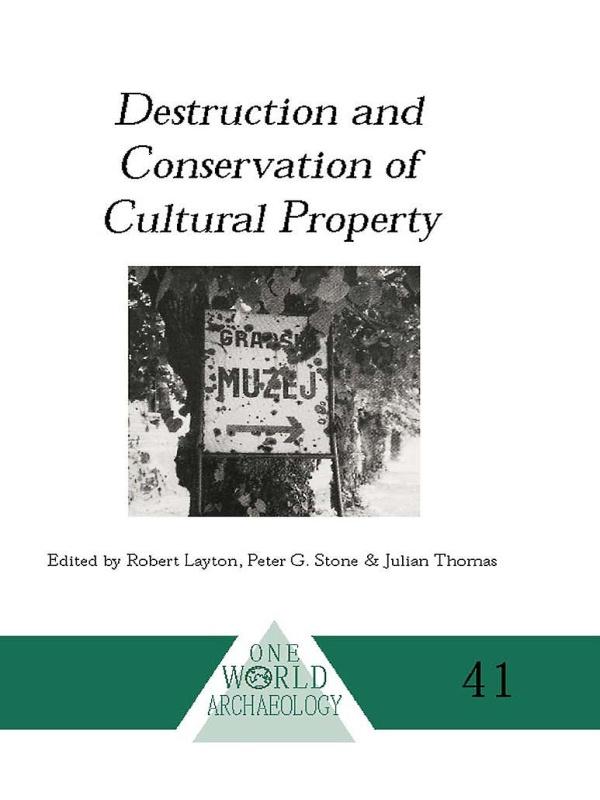
In 1991 the mosque at Ayodhya in India was demolished by Hindu fundamentalists who claim that it stood on the birthplace of a legendary Hindu hero. During recent conflicts in former Yugoslavia, ethnic groups destroyed mosques and churches to eliminate evidence of long-term settlement by other communities. Over successive centuries, however, a single building in Cordoba functioned as a mosque, a church and a synagogue. The Roman Emperor Diocletian's Palace in Split is occupied today by shops and residential apartments. What circumstances have lead to the survival and reinterpretation of some monuments, but the destruction of others?
This work asks whether the idea of world heritage is an essential mechanism for the protection of the world's cultural and natural heritage, or whether it subjugates a diversity of cultural traditions to specifically Western ideas. How far is it acceptable for one group of people to comment upon, or intercede in, the way in which another community treats the remains which it claims as its own? What are the responsibilities of multinational corporations and non-governmental organisations operating in the Developing World? Who actually owns the past: the landowner, indigenous people, the State or humankind?
Płać wygodnie kartą, Klarną, Apple Pay lub Google Pay. Nie jesteś zadowolony? Zawsze masz 14-dniową gwarancję zwrotu pieniędzy. Więcej przeczytasz w naszych warunkach. Masz pytania? Napisz do nas na hello@memmo.org.
Memmo ułatwia naukę – gdziekolwiek jesteś na świecie. U nas znajdziesz podręczniki i sprytne narzędzia do nauki w jednym miejscu: streszczenia, quizy, podcasty i fiszki. A do tego Ted, Twój kumpel do nauki, który odpowie na wszystko, co Cię nurtuje. Ponad 50 000 studentów już tu się uczy – stworzone, byś uczył się szybciej i mniej stresował.
Może Ci się spodobać
Kup książkę0