
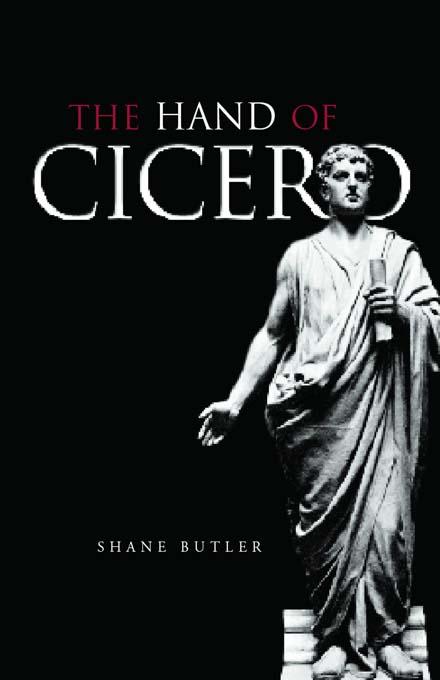
Hundreds perished in Rome's Second Proscription, but one victim is remembered above all others. Cicero stands out, however, not only because of his fame, but also because his murder included a unique addition to the customary decapitation. For his corpse was deprived not only of its head, but also of its right hand. Plutarch tells us why Mark Antony wanted the hand that wrote the Philippics. But how did it come to pass that Rome's greatest orator could be so hated for the speeches he had written?
Charting a course through Cicero's celebrated career, Shane Butler examines two principal relationships between speech and writing in Roman oratory: the use of documentary evidence by orators and the 'publication' of both delivered and undelivered speeches. He presents this fascinating theory that the success of Rome's greatest orator depended as much on writing as speaking; he also argues against the conventional wisdom that Rome was an 'oral society', in which writing was rare and served only practical, secondary purposes.
Płać wygodnie kartą, Klarną, Apple Pay lub Google Pay. Nie jesteś zadowolony? Zawsze masz 14-dniową gwarancję zwrotu pieniędzy. Więcej przeczytasz w naszych warunkach. Masz pytania? Napisz do nas na hello@memmo.org.
Memmo ułatwia naukę – gdziekolwiek jesteś na świecie. U nas znajdziesz podręczniki i sprytne narzędzia do nauki w jednym miejscu: streszczenia, quizy, podcasty i fiszki. A do tego Ted, Twój kumpel do nauki, który odpowie na wszystko, co Cię nurtuje. Ponad 50 000 studentów już tu się uczy – stworzone, byś uczył się szybciej i mniej stresował.