
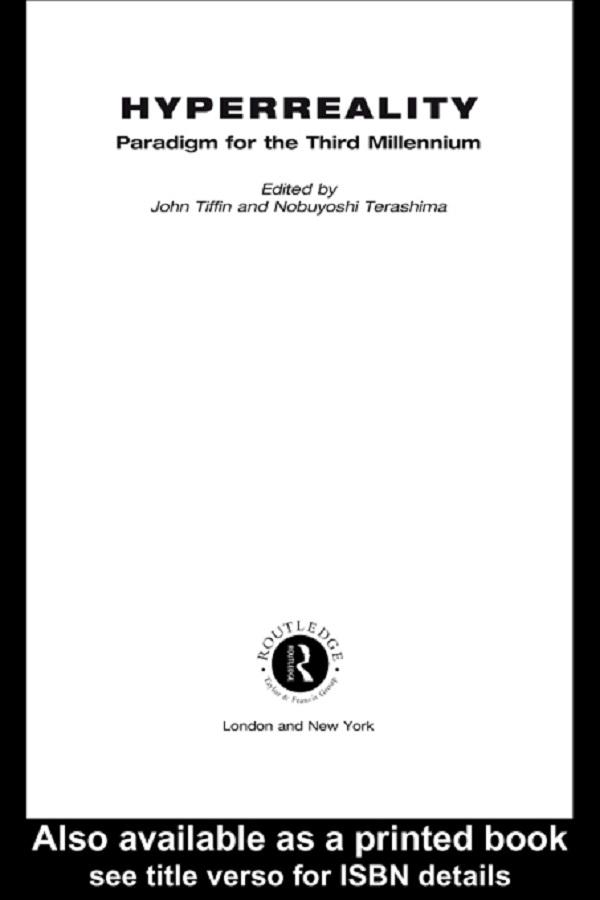
'HyperReality is a technological capability like nanotechnology, human cloning and artificial intelligence. Like them, it does not as yet exist in the sense of being clearly demonstrable and publicly available. Like them, it is maturing in laboratories where the question "if" has been replaced by the question "when?" and like them, the implications of its appearance as a basic infrastructure technology are profound and merit careful consideration.' - Nobuyoshi Terashima
What comes after the Internet? Imagine a world where it is difficult to tell if the person standing next to you is real or a virtual reality, and whether they have human intelligence or artificial intelligence; a world where people can appear to be anything they want to be. HyperReality makes this possible.
HyperReality offers a window into the world of the future, an interface between the natural and artificial. Nobuyoshi Terashima led the team that developed the prototype for HyperReality at Japan's ATT laboratories. John Tiffin studied they way HyperReality would create a new communications paradigm. Together with a stellar list of contributors from around the globe who are engaged in researching different aspects of HyperReality, they offer the first account of this extraordinary technology and its implications.
This fascinating book explores the defining features of HyperReality: what it is, how it works and how it could become to the information society what mass media was to the industrial society. It describes ongoing research into areas such as the design of virtual worlds and virtual humans, and the role of intelligent agents. It looks at applications and ways in which HyperReality may impact on fields such as translation, medicine, education, entertainment and leisure. What are its implications for lifestyles and work, for women and the elderly: Will we grow to prefer the virtual worlds we create to the physical world we adapt to?
HyperReality at the beginning of the third millennium is like steam power at the beginning of the nineteenth century and radio at the start of the twentieth century, an idea that has been shown to work but has yet to be applied. This book is for anyone concerned about the future and the effects of technology on our lives.
Płać wygodnie kartą, Klarną, Apple Pay lub Google Pay. Nie jesteś zadowolony? Zawsze masz 14-dniową gwarancję zwrotu pieniędzy. Więcej przeczytasz w naszych warunkach. Masz pytania? Napisz do nas na hello@memmo.org.
Memmo ułatwia naukę – gdziekolwiek jesteś na świecie. U nas znajdziesz podręczniki i sprytne narzędzia do nauki w jednym miejscu: streszczenia, quizy, podcasty i fiszki. A do tego Ted, Twój kumpel do nauki, który odpowie na wszystko, co Cię nurtuje. Ponad 50 000 studentów już tu się uczy – stworzone, byś uczył się szybciej i mniej stresował.