
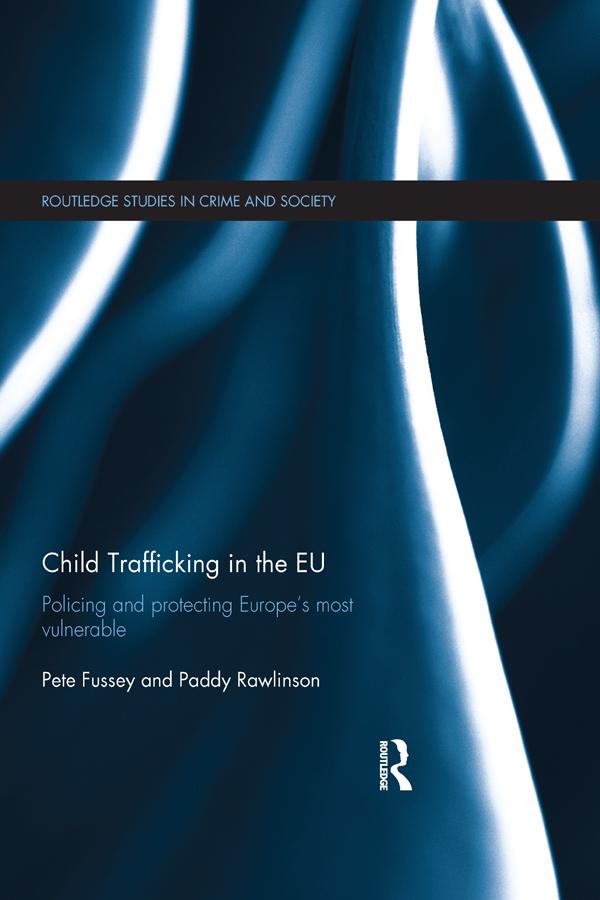
Drawing on empirical research conducted with police in the UK and Romania, Child Trafficking in the EU explores the way in which the ‘who’ and ‘how’ we police and protect as trafficker and trafficked is related to Western notions of innocence, guilt, childhood, and of the status of ‘deserving’ victim.
This book progresses a new theoretical space by linking its analysis to sociologies of mobility, marginalisation and the pluralised rendering of criminalised and victimised ‘others’. This book explores core contextual themes surrounding the commission, response to and origins of child trafficking, and presents empirical research into the investigation of child trafficking within the EU, situating the authors’ findings against broader social, cultural, political, policy and judicial contexts.
The authors conclude with a synthetisation of the key themes and arguments to situate pan-EU child trafficking within political, criminal justice, organisational, cultural, and social contexts, and consider the degree to which such criminality can be can adequately addressed by current and emerging approaches given such enduring and persistent structural issues. This book will be of interest to scholars and students within the fields of criminology, sociology, political science and law, as well as a key resource for practitioners and activists.
Płać wygodnie kartą, Klarną, Apple Pay lub Google Pay. Nie jesteś zadowolony? Zawsze masz 14-dniową gwarancję zwrotu pieniędzy. Więcej przeczytasz w naszych warunkach. Masz pytania? Napisz do nas na hello@memmo.org.
Memmo ułatwia naukę – gdziekolwiek jesteś na świecie. U nas znajdziesz podręczniki i sprytne narzędzia do nauki w jednym miejscu: streszczenia, quizy, podcasty i fiszki. A do tego Ted, Twój kumpel do nauki, który odpowie na wszystko, co Cię nurtuje. Ponad 50 000 studentów już tu się uczy – stworzone, byś uczył się szybciej i mniej stresował.