
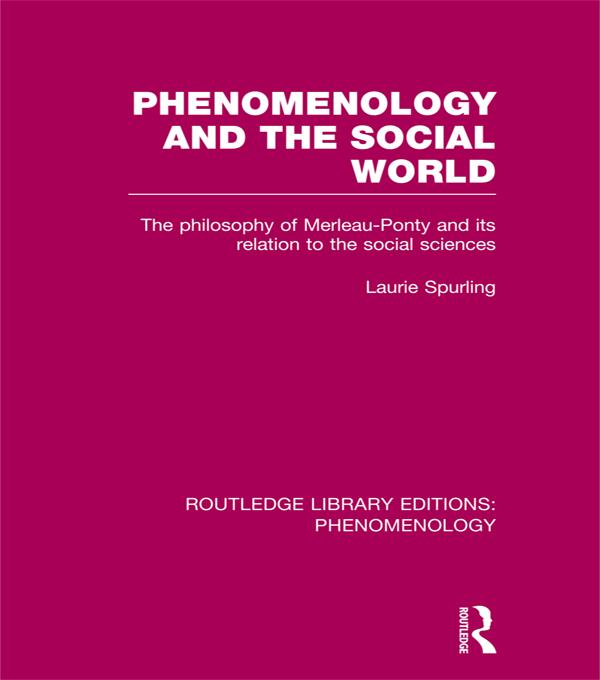
The term ‘phenomenology’ has become almost as over-used and emptied of meaning as that other word from Continental Philosophy, namely ‘existentialism’. Yet Husserl, who first put forward the phenomenological method, considered it a rigorous alternative to positivism, and in the hands of Merleau-Ponty, a disciple of Husserl in France, phenomenology became a way of gaining a disciplined and coherent perspective on the world in which we live.
When this study originally published in 1977 there were only a few books in English on Merleau-Ponty’s philosophy. It introduced the reader and suggested how his thought might throw light on some of the assumptions and presuppositions of certain contemporary forms of Anglo-Saxon philosophy and social science. It also demonstrates how phenomenology seeks to unite philosophy and social science, rather than define them as mutually exclusive domains of knowledge.
Płać wygodnie kartą, Klarną, Apple Pay lub Google Pay. Nie jesteś zadowolony? Zawsze masz 14-dniową gwarancję zwrotu pieniędzy. Więcej przeczytasz w naszych warunkach. Masz pytania? Napisz do nas na hello@memmo.org.
Memmo ułatwia naukę – gdziekolwiek jesteś na świecie. U nas znajdziesz podręczniki i sprytne narzędzia do nauki w jednym miejscu: streszczenia, quizy, podcasty i fiszki. A do tego Ted, Twój kumpel do nauki, który odpowie na wszystko, co Cię nurtuje. Ponad 50 000 studentów już tu się uczy – stworzone, byś uczył się szybciej i mniej stresował.