
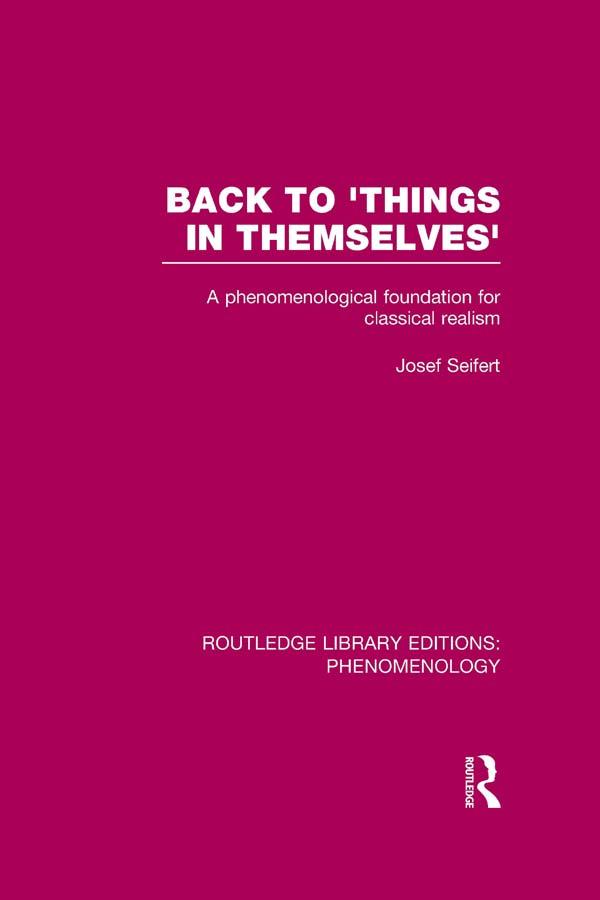
In an enlightening dialogue with Descartes, Kant, Husserl and Gadamer, Professor Seifert argues that the original inspiration of phenomenology was nothing other than the primordial insight of philosophy itself, the foundation of philosophia perennis. His radical rethinking of the phenomenological method results in a universal, objectivist philosophy in direct continuity with Plato, Aristotle and Augustine.
In order to validate the classical claim to know autonomous being, the author defends Husserl's methodological principle "Back to things themselves" from empiricist and idealist critics, including the later Husserl, and replies to the arguments of Kant which attempt to discredit the knowability of things in themselves.
Originally published in 1982, this book culminates in a phenomenological and critical unfolding of the Augustinian cogito, as giving access to immutable truth about necessary essences and the real existence of personal being.
Płać wygodnie kartą, Klarną, Apple Pay lub Google Pay. Nie jesteś zadowolony? Zawsze masz 14-dniową gwarancję zwrotu pieniędzy. Więcej przeczytasz w naszych warunkach. Masz pytania? Napisz do nas na hello@memmo.org.
Memmo ułatwia naukę – gdziekolwiek jesteś na świecie. U nas znajdziesz podręczniki i sprytne narzędzia do nauki w jednym miejscu: streszczenia, quizy, podcasty i fiszki. A do tego Ted, Twój kumpel do nauki, który odpowie na wszystko, co Cię nurtuje. Ponad 50 000 studentów już tu się uczy – stworzone, byś uczył się szybciej i mniej stresował.