
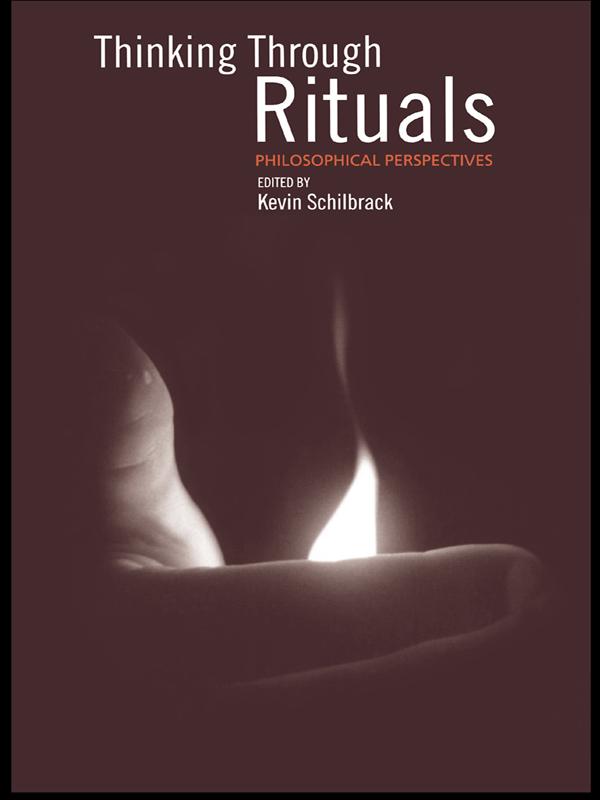
Many philosophical approaches today seek to overcome the division between mind and body. If such projects succeed, then thinking is not restricted to the disembodied mind, but is in some sense done through the body. From a post-Cartesian perspective, then, ritual activities that discipline the body are not just thoughtless motions, but crucial parts of the way people think.
Thinking Through Rituals explores religious ritual acts and their connection to meaning and truth, belief, memory, inquiry, worldview and ethics. Drawing on philosophers such as Foucault, Merleau-Ponty and Wittgenstein, and sources from cognitive science, pragmatism and feminist theory, it provides philosophical resources for understanding religious ritual practices like the Christian Eucharistic ceremony, Hatha Yoga, sacred meditation or liturgical speech.
Its essays consider a wide variety of rituals in Christianity, Judaism, Hinduism and Buddhism - including political protest rituals and gay commitment ceremonies, traditional Vedic and Yogic rites, Christian and Buddhist meditation and the Jewish Shabbat. They challenge the traditional disjunction between thought and action, showing how philosophy can help to illuminate the relationship between doing and meaning which ritual practices imply.
Płać wygodnie kartą, Klarną, Apple Pay lub Google Pay. Nie jesteś zadowolony? Zawsze masz 14-dniową gwarancję zwrotu pieniędzy. Więcej przeczytasz w naszych warunkach. Masz pytania? Napisz do nas na hello@memmo.org.
Memmo ułatwia naukę – gdziekolwiek jesteś na świecie. U nas znajdziesz podręczniki i sprytne narzędzia do nauki w jednym miejscu: streszczenia, quizy, podcasty i fiszki. A do tego Ted, Twój kumpel do nauki, który odpowie na wszystko, co Cię nurtuje. Ponad 50 000 studentów już tu się uczy – stworzone, byś uczył się szybciej i mniej stresował.