
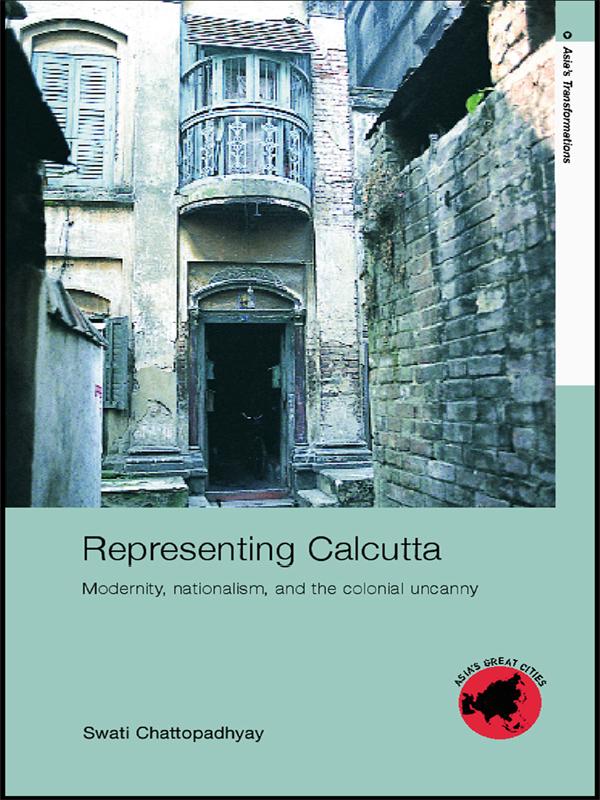
Representing Calcutta is a spatial history of the colonial city, and addresses the question of modernity that haunts our perception of Calcutta. The book responds to two inter-related concerns about the city. First is the image of Calcutta as the worst case scenario of a Third World city -- the proverbial 'city of dreadful nights.' Second is the changing nature of the city’s public spaces -- the demise of certain forms of urban sociality that has been mourned in recent literature as the passing of Bengali modernity. By examining architecture, city plans, paintings, literature, and official reports through the lens of postcolonial, feminist, and spatial theory, the book explores the conditions of colonialism and anti-colonial nationalism that produced the city as a modern artefact. At the centre of this exploration resides the problem of 'representing' the city, representation understood as description and narration, as well as political representation. In doing so, Chattopadhyay questions the very idea of colonial cities as creations of the colonizers, and the model of colonial cities as dual cities, split in black and white areas, in favour of a more complicated view of the topography.
Płać wygodnie kartą, Klarną, Apple Pay lub Google Pay. Nie jesteś zadowolony? Zawsze masz 14-dniową gwarancję zwrotu pieniędzy. Więcej przeczytasz w naszych warunkach. Masz pytania? Napisz do nas na hello@memmo.org.
Memmo ułatwia naukę – gdziekolwiek jesteś na świecie. U nas znajdziesz podręczniki i sprytne narzędzia do nauki w jednym miejscu: streszczenia, quizy, podcasty i fiszki. A do tego Ted, Twój kumpel do nauki, który odpowie na wszystko, co Cię nurtuje. Ponad 50 000 studentów już tu się uczy – stworzone, byś uczył się szybciej i mniej stresował.