
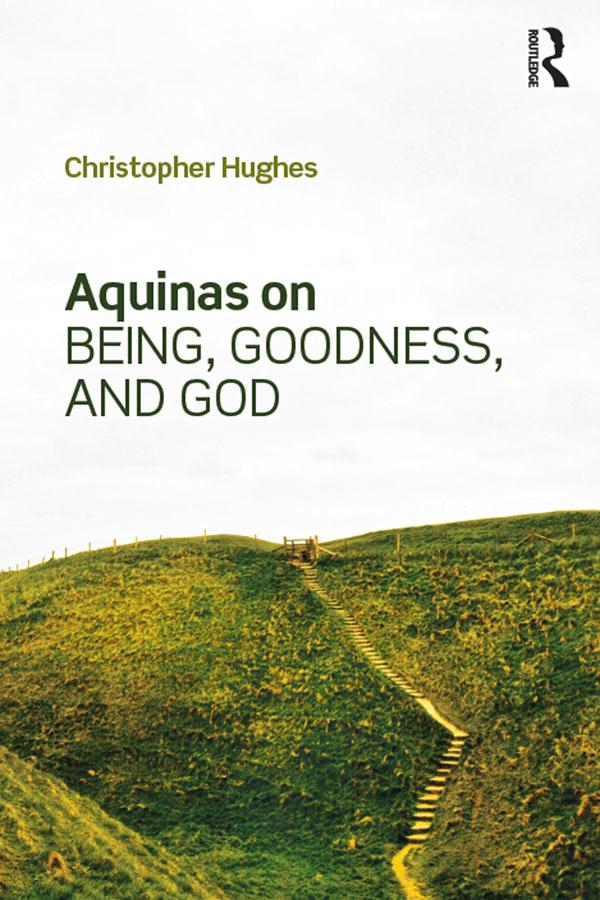
Thomas Aquinas is one of the most important figures in the history of philosophy and philosophical theology. Relying on a deep understanding of Aristotle, Aquinas developed a metaphysical framework that is comprehensive, detailed, and flexible. Within that framework, he formulated a range of strikingly original and carefully explicated views in areas including natural theology, philosophy of mind, philosophical psychology, and ethics.
In this book, Christopher Hughes focuses on Aquinas’s thought from an analytic philosophical perspective. After an overview of Aquinas’s life and works, Hughes discusses Aquinas’s metaphysics, including his conception of substance, matter, and form, and his account of essence and existence; and his theory of the nature of human beings, including his critique of a substance dualism that Aquinas attributes to Plato, but is usually associated with Descartes. In the final chapters, Hughes discusses Aquinas’s account of the existence and nature of God, and his treatment of the problem of evil, as well as his ideas about the relation of goodness to being, choice, and happiness.
Aquinas on Being, Goodness, and God is essential reading for students and scholars of Aquinas, and anyone interested in philosophy of religion or the history of medieval philosophy.
Płać wygodnie kartą, Klarną, Apple Pay lub Google Pay. Nie jesteś zadowolony? Zawsze masz 14-dniową gwarancję zwrotu pieniędzy. Więcej przeczytasz w naszych warunkach. Masz pytania? Napisz do nas na hello@memmo.org.
Memmo ułatwia naukę – gdziekolwiek jesteś na świecie. U nas znajdziesz podręczniki i sprytne narzędzia do nauki w jednym miejscu: streszczenia, quizy, podcasty i fiszki. A do tego Ted, Twój kumpel do nauki, który odpowie na wszystko, co Cię nurtuje. Ponad 50 000 studentów już tu się uczy – stworzone, byś uczył się szybciej i mniej stresował.