
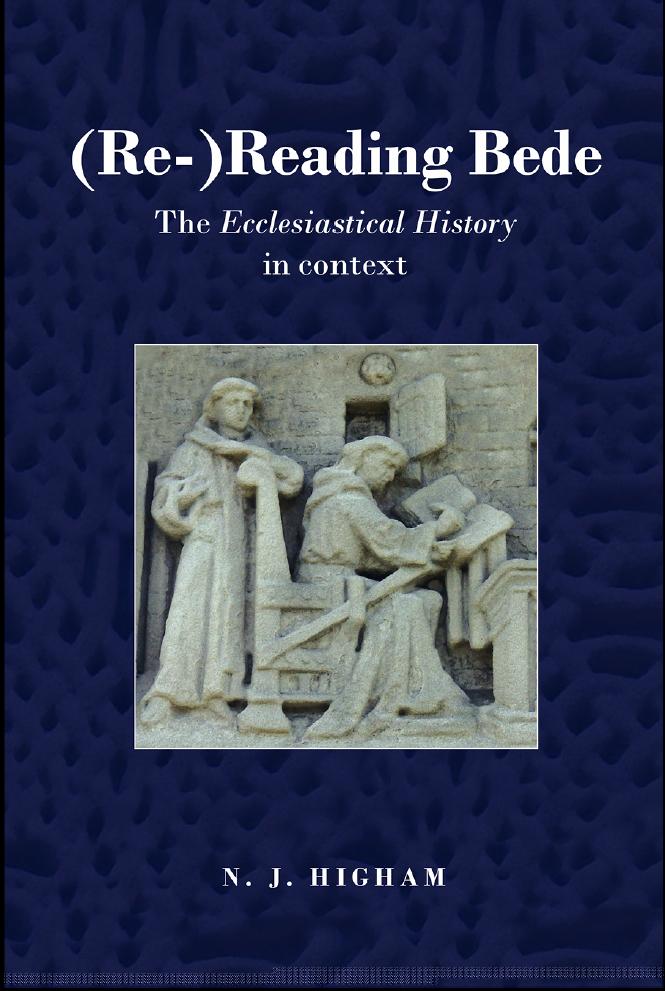
Bede's Ecclesiastical History is the most important single source for early medieval English history. Without it, we would be able to say very little about the conversion of the English to Christianity, or the nature of England before the Viking Age.
Bede wrote for his contemporaries, not for a later audience, and it is only by an examination of the work itself that we can assess how best to approach it as a historical source. N.J. Higham shows, through a close reading of the text, what light the Ecclesiastical History throws on the history of the period and especially on those characters from seventh- and early eighth-century England whom Bede either heroized, such as his own bishop, Acca, and kings Oswald and Edwin, or villainized, most obviously the British king Cædwalla but also Oswiu, Oswald's brother.
In (Re-)Reading Bede, N.J. Higham offers a fresh approach to how we should engage with this great work of history. He focuses particularly on Bede's purposes in writing it, its internal structure, the political and social context in which it was composed and the cultural values it betrays, remembering always that our own approach to Bede has been influenced to a very great extent by the various ways in which he has been both used, as a source, and commemorated, as man and saint, across the last 1,300 years.
Płać wygodnie kartą, Klarną, Apple Pay lub Google Pay. Nie jesteś zadowolony? Zawsze masz 14-dniową gwarancję zwrotu pieniędzy. Więcej przeczytasz w naszych warunkach. Masz pytania? Napisz do nas na hello@memmo.org.
Memmo ułatwia naukę – gdziekolwiek jesteś na świecie. U nas znajdziesz podręczniki i sprytne narzędzia do nauki w jednym miejscu: streszczenia, quizy, podcasty i fiszki. A do tego Ted, Twój kumpel do nauki, który odpowie na wszystko, co Cię nurtuje. Ponad 50 000 studentów już tu się uczy – stworzone, byś uczył się szybciej i mniej stresował.