
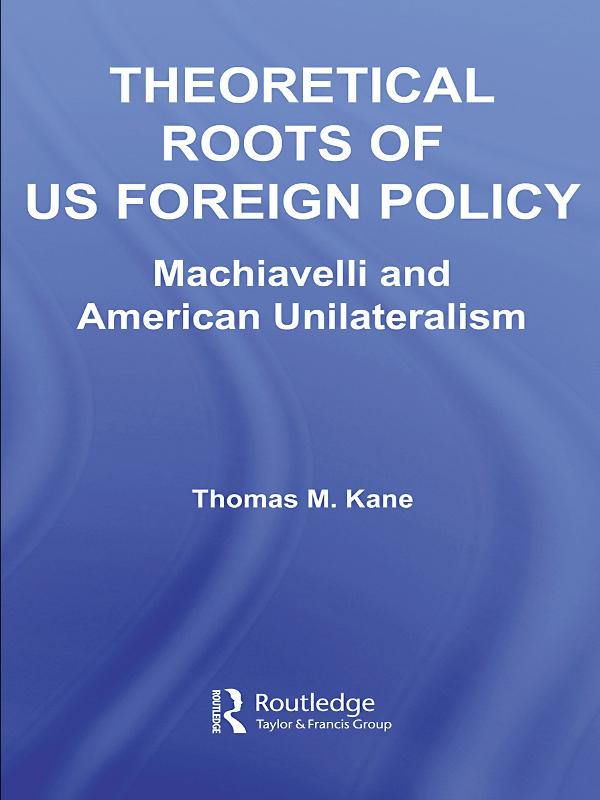
This volume explores the reasons why American leaders from the 1700s onwards frequently adopt policies of unilateralism.
Thomas M. Kane presents fresh explanations for America’s invasion of Iraq and defiance of international agreements, which go much deeper than conventional critiques of particular presidents to examine the real significance of the September 11 attacks. As the only and unprecedented sole superpower, the US faces a range of new and complex problems. Kane draws on the thinking of Machiavelli to illuminate and assess the key challenges for both the US and the global community.
This unique book:
- connects contemporary US policy to patterns that reach back to America’s founding
- explores political dynamics affecting all republics
- contributes to theoretical debates about the benevolence, or otherwise, of American democracy
- highlights the key issues that Americans and non-Americans alike must address now and in the future.
Theoretical Roots of US Foreign Policy will be of great interest to all students of US foreign policy, strategy and history and of international relations, politics and strategic studies in general.
Płać wygodnie kartą, Klarną, Apple Pay lub Google Pay. Nie jesteś zadowolony? Zawsze masz 14-dniową gwarancję zwrotu pieniędzy. Więcej przeczytasz w naszych warunkach. Masz pytania? Napisz do nas na hello@memmo.org.
Memmo ułatwia naukę – gdziekolwiek jesteś na świecie. U nas znajdziesz podręczniki i sprytne narzędzia do nauki w jednym miejscu: streszczenia, quizy, podcasty i fiszki. A do tego Ted, Twój kumpel do nauki, który odpowie na wszystko, co Cię nurtuje. Ponad 50 000 studentów już tu się uczy – stworzone, byś uczył się szybciej i mniej stresował.