
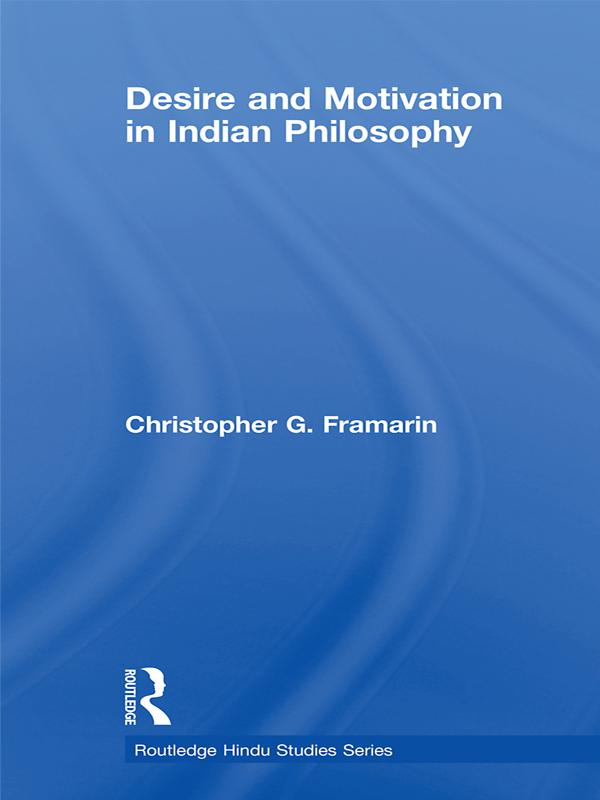
Desireless action is typically cited as a criterion of the liberated person in classical Indian texts. Contemporary authors argue with near unanimity that since all action is motivated by desire, desireless action is a contradiction. They conclude that desireless action is action performed without certain desires; other desires are permissible.
In this book, the author surveys the contemporary literature on desireless action and argues that the arguments for the standard interpretation are unconvincing. He translates, interprets, and evaluates passages from a number of seminal classical Sanskrit texts, and argues that the doctrine of desireless action should indeed be taken literally, as the advice to act without any desire at all. The author argues that the theories of motivation advanced in these texts are not only consistent, but plausible.
This book is the first in-depth analysis of the doctrine of desireless action in Indian philosophy. It serves as a reference to both contemporary and classical literature on the topic, and will be of interest to scholars of Indian philosophy, religion, the Bhagavadgita and Hinduism.
Płać wygodnie kartą, Klarną, Apple Pay lub Google Pay. Nie jesteś zadowolony? Zawsze masz 14-dniową gwarancję zwrotu pieniędzy. Więcej przeczytasz w naszych warunkach. Masz pytania? Napisz do nas na hello@memmo.org.
Memmo ułatwia naukę – gdziekolwiek jesteś na świecie. U nas znajdziesz podręczniki i sprytne narzędzia do nauki w jednym miejscu: streszczenia, quizy, podcasty i fiszki. A do tego Ted, Twój kumpel do nauki, który odpowie na wszystko, co Cię nurtuje. Ponad 50 000 studentów już tu się uczy – stworzone, byś uczył się szybciej i mniej stresował.