
During the Global Financial Crisis in 2008, our financial infrastructure failed.
Governments bailed out the very institutions that let the economy down. This episode spurred a serious rethink of our financial system. Does it make any sense that it takes two days to settle a stock transaction? Why do retailers, operating on razor thin margins, have to pay 3% for every customer credit card swipe? Why does it take two days to transfer money from a bank account to a brokerage—or any other company? Why are savings rates miniscule or negative? Why is it so difficult for entrepreneurs to get financing at traditional banks?
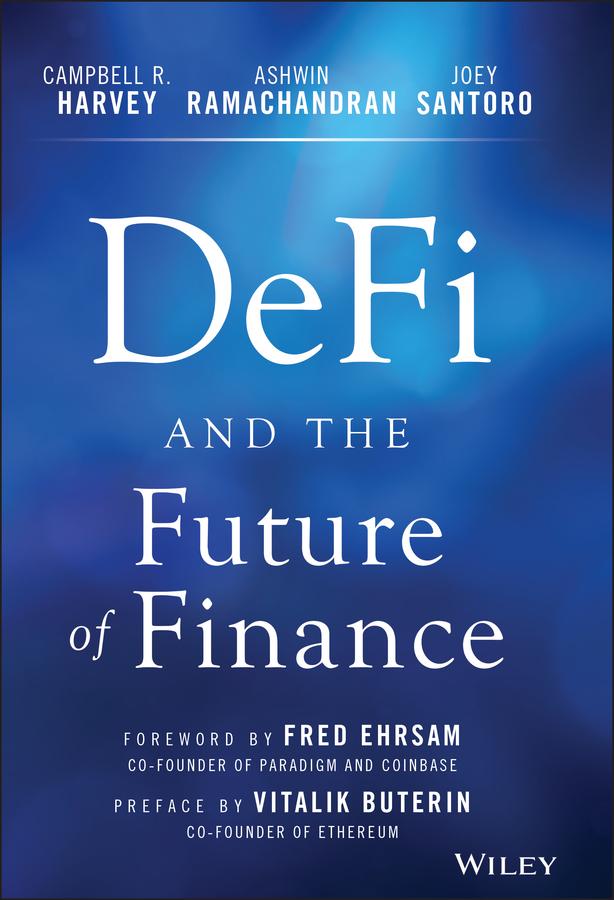
In DeFi and the Future of Finance, Campbell R. Harvey, Ashwin Ramachandran and Joey Santoro, introduce the new world of Decentralized Finance. The book argues that the current financial landscape is ripe for disruption and we are seeing, in real time, the reinvention of finance.
The authors provide the reader with a clear assessment of the problems with the current financial system and how DeFi solves many of these problems. The essence of DeFi is that we interact with peers—there is no brick and mortar and all of the associated costs. Savings and lending are reinvented. Trading takes place with algorithms far removed from traditional brokerages.
The book conducts a deep dive on some of the most innovative protocols such as Uniswap and Compound. Many of the companies featured in the book you might not have heard of—however, you will in the future.
As with any new technology, there are a myriad of risks and the authors carefully catalogue these risks and assess which ones can be successfully mitigated.
Ideally suited for people working in any part of the finance industry as well as financial policy makers, DeFi and the Future of Finance gives readers a vision of the future. The world of finance will fundamentally be changed over the coming decade. The book enables you to become part of the disruption – not the target of the disruption.
Płać wygodnie kartą, Klarną, Apple Pay lub Google Pay. Nie jesteś zadowolony? Zawsze masz 14-dniową gwarancję zwrotu pieniędzy. Więcej przeczytasz w naszych warunkach. Masz pytania? Napisz do nas na hello@memmo.org.
Memmo ułatwia naukę – gdziekolwiek jesteś na świecie. U nas znajdziesz podręczniki i sprytne narzędzia do nauki w jednym miejscu: streszczenia, quizy, podcasty i fiszki. A do tego Ted, Twój kumpel do nauki, który odpowie na wszystko, co Cię nurtuje. Ponad 50 000 studentów już tu się uczy – stworzone, byś uczył się szybciej i mniej stresował.