
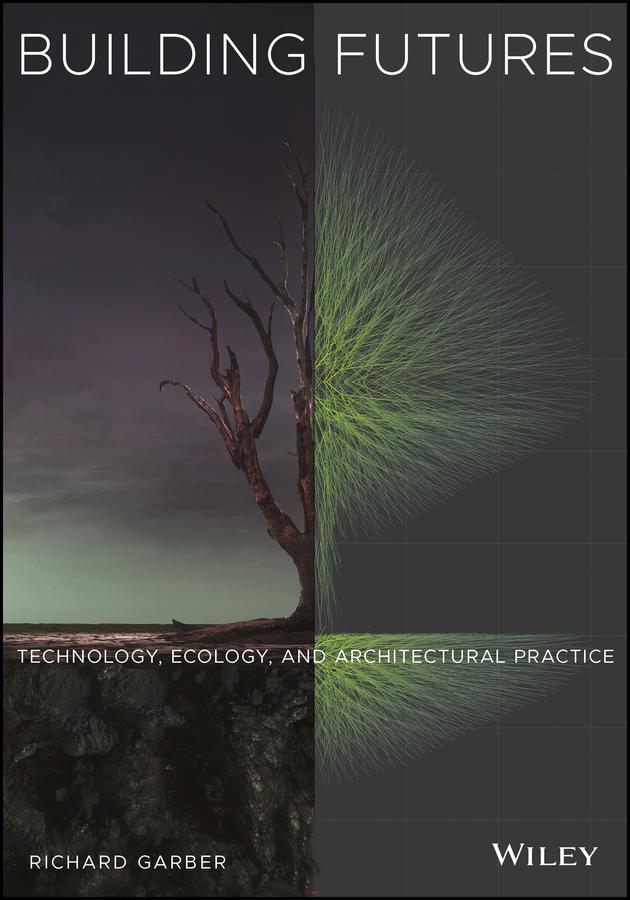
An approach to Information Modeling engaging concepts of equality, sustainability, and labor as they relate to environment and architectural practice
Building Futures: Technology, Ecology, and Architectural Practice explores how architects, and the buildings and environments we create, can engage future realities, both abstract and readily understood. These range from climate change and public health to advanced ideas about manufacture and construction. The text demonstrates multiple and hybrid paths in which building information modeling (BIM) and outgrowth technological processes including environmental simulation and human-robot interaction can be utilized in today’s contemporary context, expanding the architect’s agency by focusing on a more conceptual, and ecological, basis for our work. Moving beyond a basic understanding of the role of computation in architecture and design, the work shows how to think critically and speculatively about technology’s deeper and more lasting impacts on both architecture and society. Topics covered in Building Futures include:
- Technology: information modeling and the relationship between computational and real objects, new approaches to coding in architectural design, and direct-to-manufacture workflows
- Environment: understanding part-to-whole relationships at a variety of scales and the interconnectedness of things, post-subjective architectural approaches to ecology, and new ideas about sustainability
- Practice: revisiting architecture by remote control in the time of new global challenges, and novel ideas about creativity, authorship, and professionalism
Design professionals and practice leaders grappling with the relationship of technology to design pedagogy will use Building Futures to better theorize and execute their architectural vision. Students in upper-level courses studying technique and theory will also find value in the work, which prepares incoming professionals for the major changes that the Architecture, Engineering, and Construction (AEC) industry may undergo in the coming years and decades.
“The book prompts us to consider simulating events where architecture and architects could mitigate, redirect or develop contingencies, in relation to the environment, flows of material and capital, and other “things” that operate from the immediate, through to almost geological timescales.”
From the Foreword by Robert Stuart-Smith, Director of the Autonomous Manufacturing Lab, University of Pennsylvania
Płać wygodnie kartą, Klarną, Apple Pay lub Google Pay. Nie jesteś zadowolony? Zawsze masz 14-dniową gwarancję zwrotu pieniędzy. Więcej przeczytasz w naszych warunkach. Masz pytania? Napisz do nas na hello@memmo.org.
Memmo ułatwia naukę – gdziekolwiek jesteś na świecie. U nas znajdziesz podręczniki i sprytne narzędzia do nauki w jednym miejscu: streszczenia, quizy, podcasty i fiszki. A do tego Ted, Twój kumpel do nauki, który odpowie na wszystko, co Cię nurtuje. Ponad 50 000 studentów już tu się uczy – stworzone, byś uczył się szybciej i mniej stresował.